

A polished clinic website cannot tell you whether a provider can assess you properly, explain uncertainty, or manage a complication. Before choosing a penis enlargement doctor, verify the person, procedure, product, and follow-up plan. This guide shows you how to check those points without treating a license, testimonial, or dramatic photo as proof of a good outcome.
Key takeaway:
- Check the provider’s active license and relevant specialty credentials through official sources.
- Ask about experience with the exact procedure, not cosmetic medicine in general.
- Confirm how the provider handles consent, complications, follow-up, and referral before you pay.
This guide helps you compare providers. It cannot determine whether a provider or procedure is appropriate for your health, anatomy, or goals.
What Qualifications Should a Penile Enhancement Provider Have?
A penile enhancement provider should hold an active professional license that covers the proposed care in the relevant jurisdiction. The provider should also have training and experience that match the exact procedure. General cosmetic experience does not establish competence with penile injections, implants, or surgery.
Qualifications are only the first screen. A credible provider should explain the evidence, risks, alternatives, product, complication plan, and follow-up. These checks cannot guarantee an outcome, but they separate verifiable information from promotion.
A urologist or sexual medicine specialist may have relevant training, but you still need to check current credentials and procedure-specific experience.
How Do You Verify a Penis Enlargement Doctor’s License and Specialty?
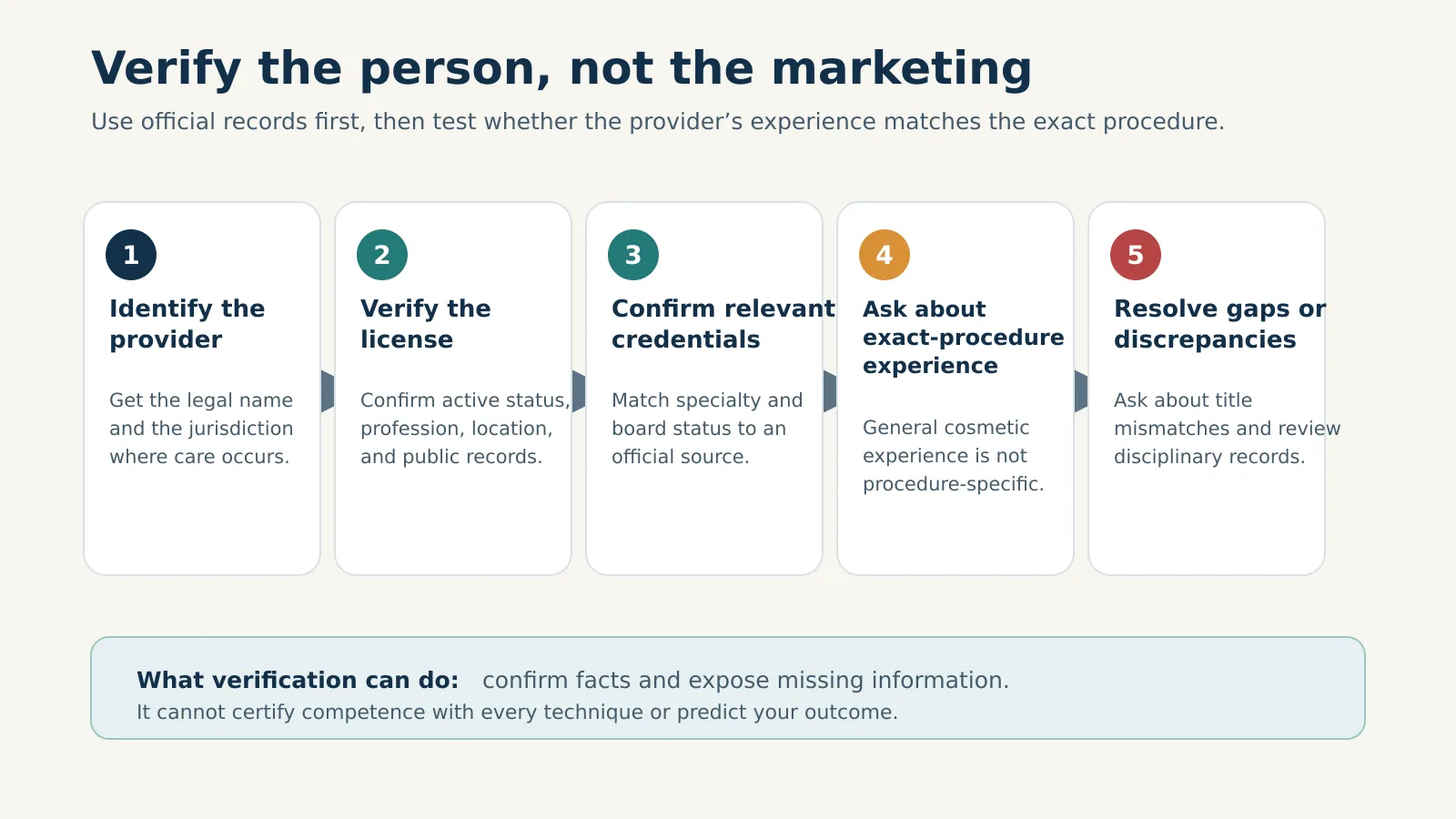
Start with the provider’s legal name and the jurisdiction where the care will occur. Use the Federation of State Medical Boards directory to find the appropriate board. Confirm the license status, profession, and available disciplinary information.
Check claimed board certification through the specialty board or the American Board of Medical Specialties verification service. Match the name, specialty, and location. A clinic biography does not confirm the credential.
| Verification point | What to check | What it does not prove |
| Professional license | Active status in the relevant jurisdiction | Experience with a specific procedure |
| Specialty training | Training related to urology, surgery, or sexual medicine | A predictable cosmetic outcome |
| Board certification | Current status through the certifying body | Competence with every enhancement technique |
| Clinic relationship | Where the clinician works and provides follow-up | Hospital access unless separately confirmed |
| Disciplinary record | Public information from the licensing board | The quality of every past treatment |
Ask about any difference between an advertised title and the official record. Do not rely on badges that you cannot trace to a licensing or certifying body.
How Should a Penis Enlargement Doctor Explain Evidence, Risks, and Results?
The provider should explain what research supports the exact procedure, what researchers measured, how long they followed participants, and whether the findings apply to you. Short follow-up cannot answer long-term questions.
The 2024 Sexual Medicine Society of North America position statement describes limited evidence for many invasive cosmetic penile procedures. It also identifies gaps in long-term follow-up and complication reporting. A provider should make those limits clear during counselling.
The site’s guide to the evidence on penis enlargement procedures explains how study design, sample selection, measurement methods, and follow-up affect what a result can mean.
What the Provider Should Explain
Ask the provider to name the intervention and the outcome it aims to change. The discussion should cover possible benefits, complications, alternatives, recovery, follow-up, and the option of not proceeding. The provider should separate published evidence from personal clinical experience.
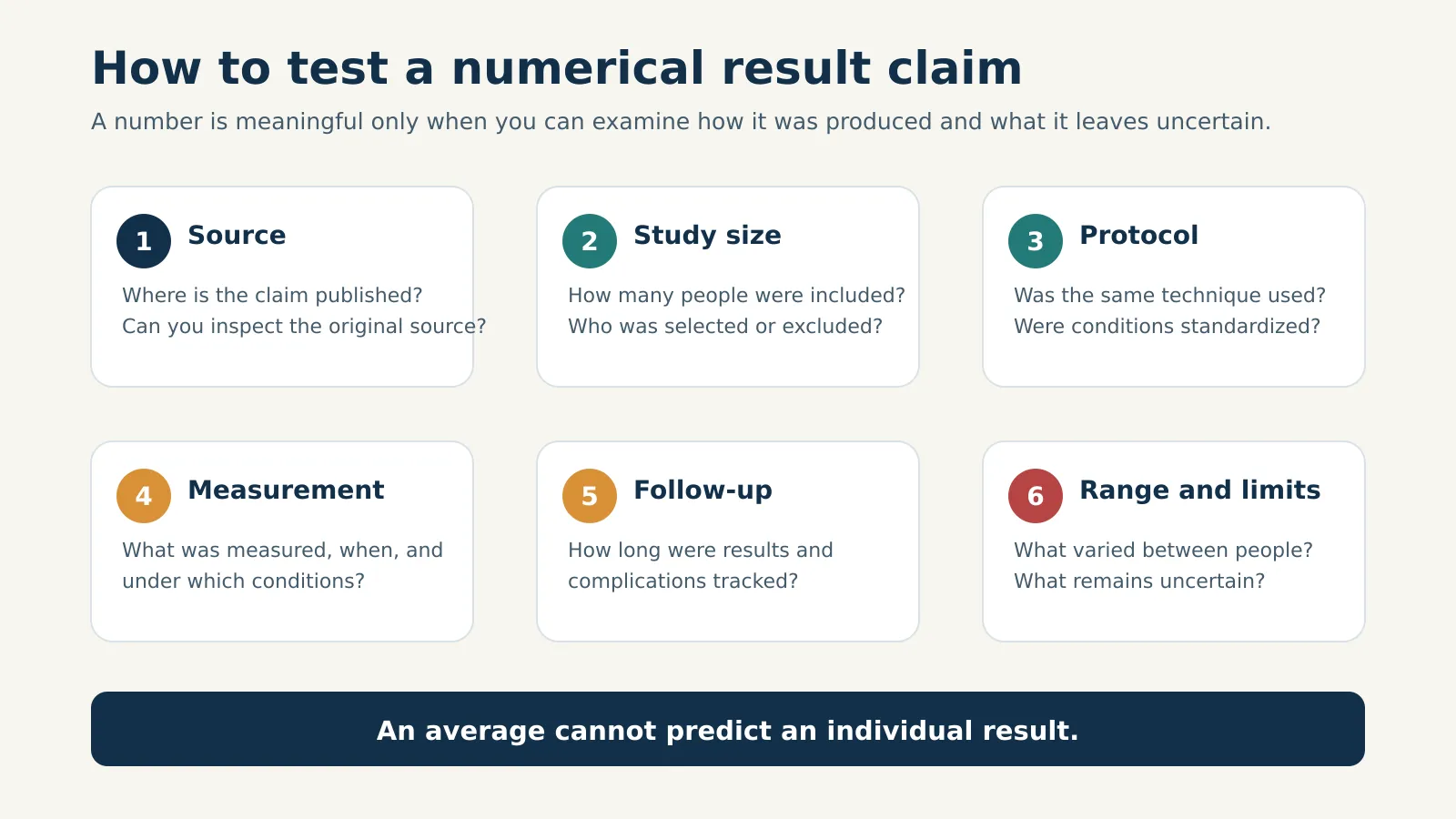
For any numerical claim, ask for the source, study size, protocol, measurement method, follow-up, and range of outcomes. An average cannot predict an individual result.
What Remains Uncertain
Long-term results remain uncertain for several approaches. Studies may use different techniques, products, outcome measures, and definitions of complications. A careful provider should acknowledge those differences.
Before-and-after images cannot resolve that uncertainty by themselves. Lighting, angle, erection state, timing, and measurement method can change the apparent result. Use the guide to assessing penis enlargement before-and-after photos when reviewing visual claims.
What Should Happen During the Consultation Before Any Procedure?
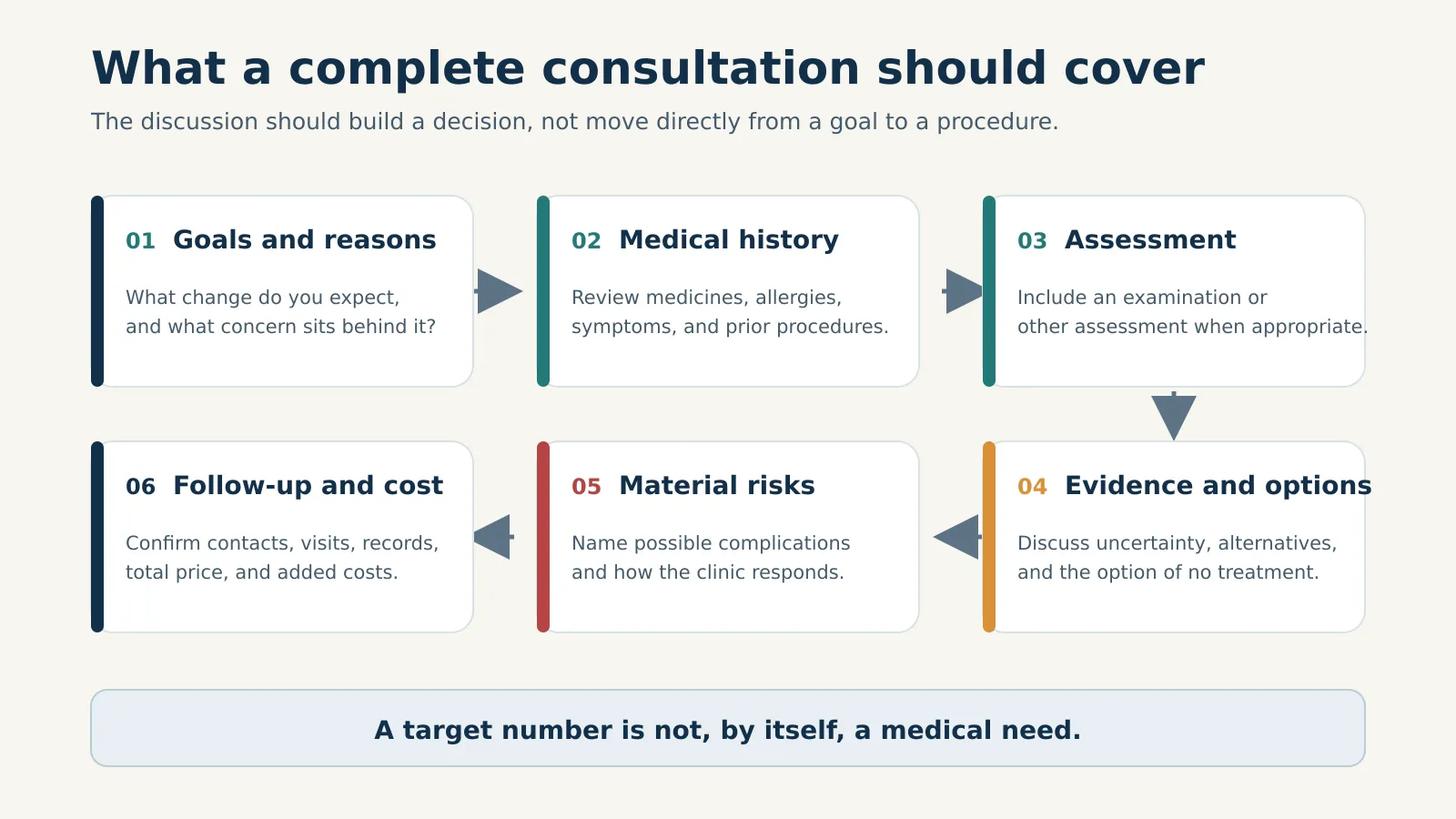
A consultation should clarify your goals before a treatment plan. The provider should review relevant medical history, medications, allergies, previous procedures, symptoms, and factors that may affect risk. The assessment may include an examination when appropriate.
The provider should ask what change you expect and why. A measurement above or below an average does not establish a need for treatment. Review average penis length and realistic penis enlargement expectations before treating a target number as a medical goal.
A 2022 review of men seeking penile augmentation found that many treatment seekers had dimensions within typical ranges. It also emphasized counselling and psychological assessment. If distress or fixed expectations affect the decision, the provider should discuss assessment by an appropriate professional. The guide to penis enlargement and body dysmorphia explains why cosmetic treatment cannot address every source of distress.
Before consent, you should understand the proposed procedure, reasonable alternatives, material risks, follow-up plan, total quoted cost, and what happens if you change your mind.
What Should You Ask About Products, Facilities, and Complication Planning?
Ask for the exact name of every product, device, or material. The provider should identify its manufacturer, source, intended use, and regulatory status. Vague terms such as “medical-grade filler” prevent meaningful verification.
Product and Sourcing Questions
Ask these questions in writing:
- What is the product or device name?
- Who manufactures it?
- Where does the clinic obtain it?
- What indication has the regulator cleared or approved, if any?
- Does the proposed use differ from that indication?
- Will the clinic provide the label or patient information before treatment?
Regulatory words require precision. The US Food and Drug Administration states that registration or listing does not mean device approval. Ask the provider to distinguish registration, listing, clearance, and approval. If the proposed use differs from the authorized indication, ask how that affects the evidence, consent, and alternatives.
Facility and Complication Questions
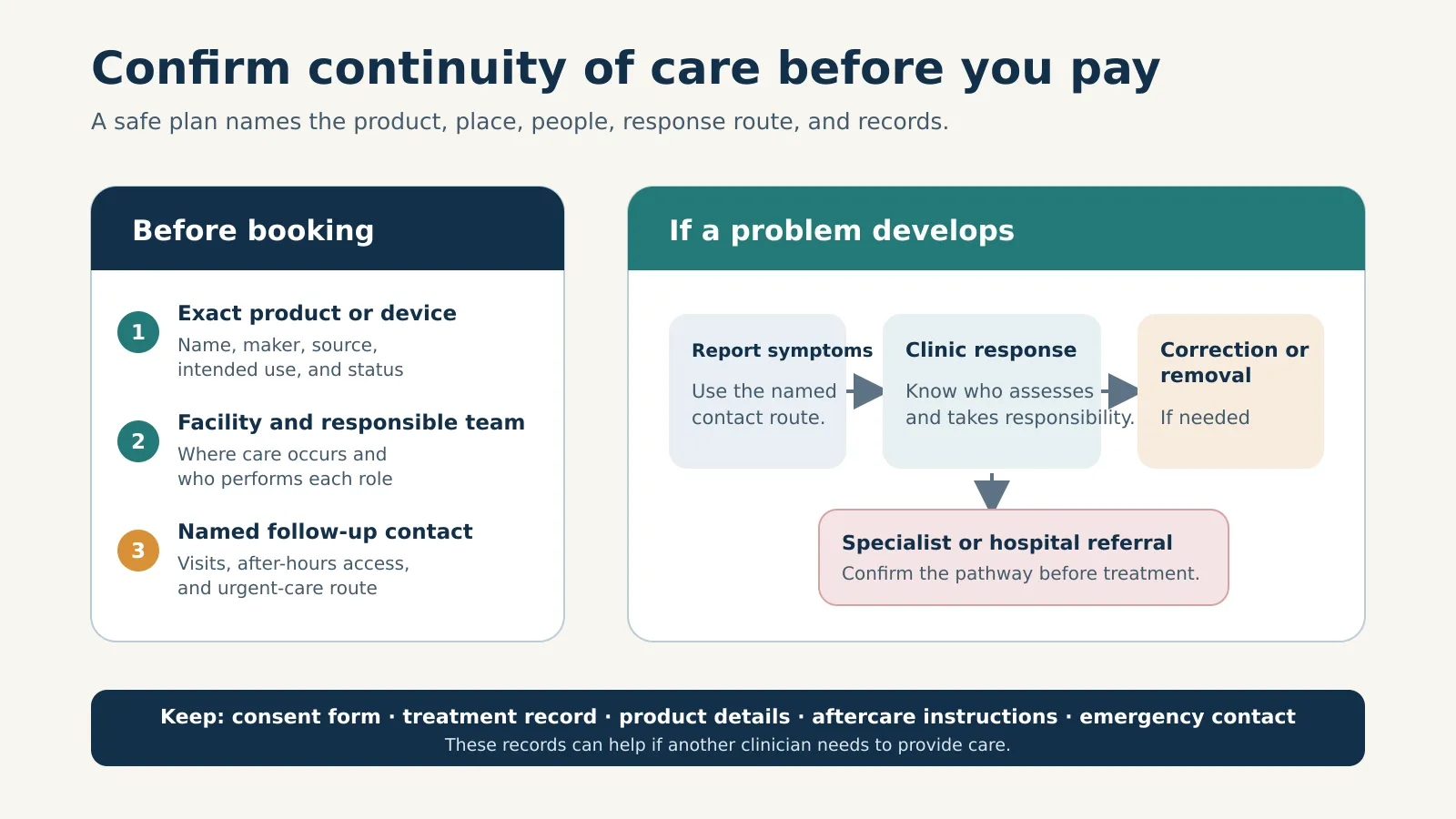
Ask where the procedure will occur and who will respond if a complication develops. The provider should explain how the clinic handles urgent symptoms, after-hours concerns, tissue injury, product removal, or specialist referral.
Confirm the transfer or referral pathway. Do not assume that a clinic has hospital access because its website uses medical language. Ask who takes responsibility if the original provider becomes unavailable.
What Should Follow-up Care and Referral Access Look Like?
The follow-up plan should name who reviews recovery and addresses concerns. Ask when visits occur, how to report symptoms, and which problems require urgent care.
Ask what the quoted fee includes. Clinics may charge separately for follow-up, medication, correction, imaging, product removal, or complication care. The guide to penis enlargement cost separates the advertised price from the wider cost of care.
Request copies of your consent form, treatment record, product details, aftercare instructions, and emergency contact information. These records matter if you need care from another clinician later.
What Are the Red Flags When Comparing Penis Enlargement Doctors?
One red flag does not prove misconduct, but it should prompt more questions.
| Red flag | Why it matters | More credible signal |
| Guaranteed size increase or duration | Individual outcomes vary | The provider explains ranges, uncertainty, and limitations |
| “No risk” or “no complications” language | Every invasive procedure carries potential harm | The consent discussion names complications and response steps |
| Credentials without official verification | A biography can omit context | The clinic links to licensing and certification records |
| Vague product descriptions | You cannot check the material or status | The provider names the product, manufacturer, and intended use |
| Pressure to pay immediately | Pressure limits time for review | The clinic allows questions and time to consider options |
| Selected photos presented as typical | Images may not represent usual outcomes | The provider explains photography methods and variation |
| No written follow-up plan | You may not know who manages a concern | The clinic provides named contacts and escalation instructions |
If a website promises a precise result but the consultation cannot explain the evidence, treat the claim as unresolved.
What Questions Should You Ask Before Booking or Paying?
Use this checklist before booking or paying:
- Is the provider’s license active in the relevant jurisdiction?
- What relevant specialty training or certification can I verify?
- How much experience does the provider have with this exact procedure?
- What evidence supports the proposed benefit?
- What remains uncertain about the outcome or duration?
- What complications can occur, and who manages them?
- What product or device will the provider use?
- What follow-up care does the quoted fee include?
- What happens if I need referral, correction, or product removal?
- Can I review the consent documents before paying?
Record the answers so you can compare clinics using the same criteria.
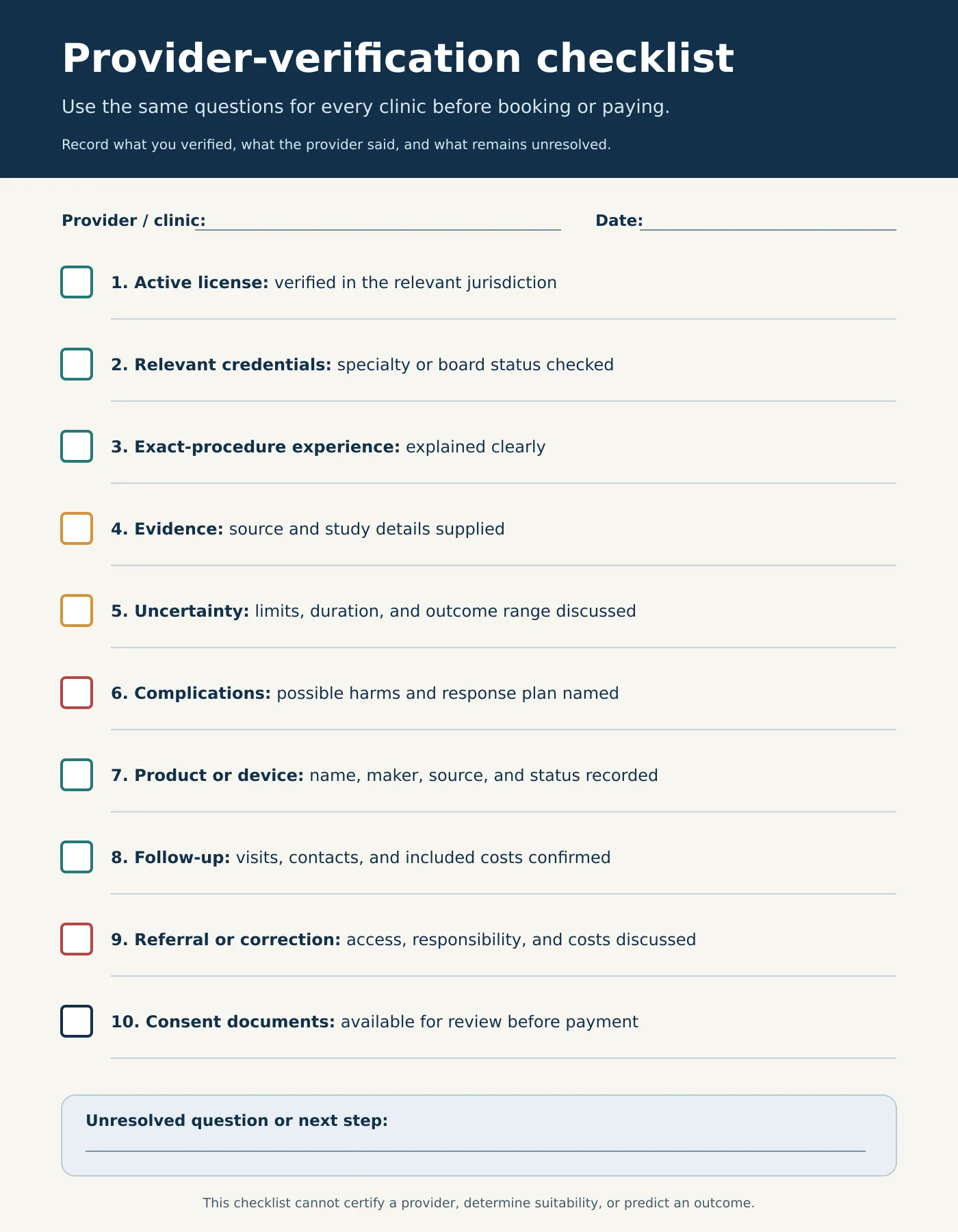
Download the consultation and provider-verification checklist. Use it to record credentials, product details, evidence claims, costs, follow-up arrangements, and unresolved questions before you decide.
When should you pause and seek professional assessment?
Pause if the provider avoids alternatives, guarantees a result, minimizes complications, or pressures you to pay. Stop if the treatment remains unclear or nobody can explain who manages follow-up.
Seek another medical opinion when a health condition, symptom, medication, or previous procedure may affect treatment. If distress about size feels persistent, consider a qualified mental health assessment before another cosmetic consultation.
Ask whether the proposed change addresses your concern and whether the available evidence justifies the risks.
Use a Provider-Verification Checklist Before Your Next Step
Verify the clinician’s license, relevant credentials, experience, product information, complication plan, follow-up, and referral pathway.
Compare the answers with the evidence on whether penis enlargement options work. A provider who cannot explain uncertainty cannot support a considered decision.
Download the consultation and provider-verification checklist before booking or paying. The checklist organizes the questions, but it does not certify a provider or replace medical assessment.
Frequently Asked Questions
What is a penis enlargement doctor?
The phrase usually means a physician who evaluates or performs cosmetic penile enhancement procedures. It is not a formal specialty title. Verify the license, specialty credentials, and experience with the exact procedure.
What qualifications should a penile enhancement provider have?
Check for an active license, relevant training, procedure-specific experience, clear consent practices, and documented follow-up. Appropriate qualifications depend on the procedure, provider role, and jurisdiction.
When should I research a provider before booking?
Complete your checks before paying a deposit or scheduling treatment. This gives you time to compare credentials, products, risks, costs, and follow-up without appointment pressure.
Should a urologist or sexual medicine specialist evaluate me?
A urologist or sexual medicine specialist may have relevant expertise, especially when symptoms, prior procedures, or surgery require assessment. The right clinician depends on your needs and proposed treatment.
What should a consultation with a penis enlargement doctor include?
The consultation should cover your history, goals, procedure, alternatives, evidence, risks, costs, and follow-up. The provider should explain whether you need an examination or another professional assessment.
How can I tell whether a provider explains risks honestly?
Look for specific complications, limits, and response plans. The provider should explain uncertainty, answer questions directly, and avoid promises about size, duration, comfort, or satisfaction.
Does board certification prove experience in penile enhancement?
Board certification confirms training within that board’s specialty. It does not prove experience with every cosmetic procedure. Ask about the exact technique, product, and complication-management experience.
Is a cosmetic clinic or specialist doctor better for penile enhancement?
The clinic label cannot answer that question. Compare the provider’s legal scope, training, procedure experience, product information, facility, complication plan, and continuity of follow-up.
What should I ask about follow-up after penile enhancement?
Ask who reviews recovery, when visits occur, how to report symptoms, and where to seek urgent care. Confirm which follow-up or complication-related costs the quote includes.
What should I ask about price before paying a provider?
Request a written breakdown for the procedure, product, facility, medication, follow-up, and possible revision. The advertised price may not represent the full cost of care.
Can a provider-verification checklist help me compare doctors?
The checklist gives you consistent questions for each clinic. It cannot certify competence or predict results, but it can expose missing information and reduce reliance on marketing.
What should I do if I am still unsure which provider to choose?
Do not proceed until you understand the procedure, risks, alternatives, costs, and follow-up. Seek another qualified medical opinion and compare the answers before deciding.
Sources
- Cosmetic penile enhancement procedures: an SMSNA position statement, The Journal of Sexual Medicine, 2024.
- Revelations on Men Who Seek Penile Augmentation Surgery: A Review, Sexual Medicine Reviews, 2022.
- Verify Certification, American Board of Medical Specialties.
- Contact a State Medical Board, Federation of State Medical Boards.
- How to check whether a medical device is FDA approved, cleared, or registered, US Food and Drug Administration.