
An advertised procedure fee rarely tells you what you will pay from consultation through follow-up. Penis enlargement cost changes with the procedure, product quantity, number of sessions, location, maintenance plan, and care needed after treatment. This guide uses current regulatory information and professional guidance to help you compare written quotes without treating price as proof of safety or results.
Key takeaway: Compare the total cost, not only the advertised amount. Include assessment, treatment sessions, facility or anesthesia charges, travel, time away from work, aftercare, maintenance, and possible correction or revision. A qualified clinician must still determine whether a procedure suits your health and goals.
What Does Penis Enlargement Cost Include?
A useful estimate covers the entire comparison period. A low initial fee can become more expensive if it excludes sessions, follow-up, or maintenance. A high fee still cannot prove quality.
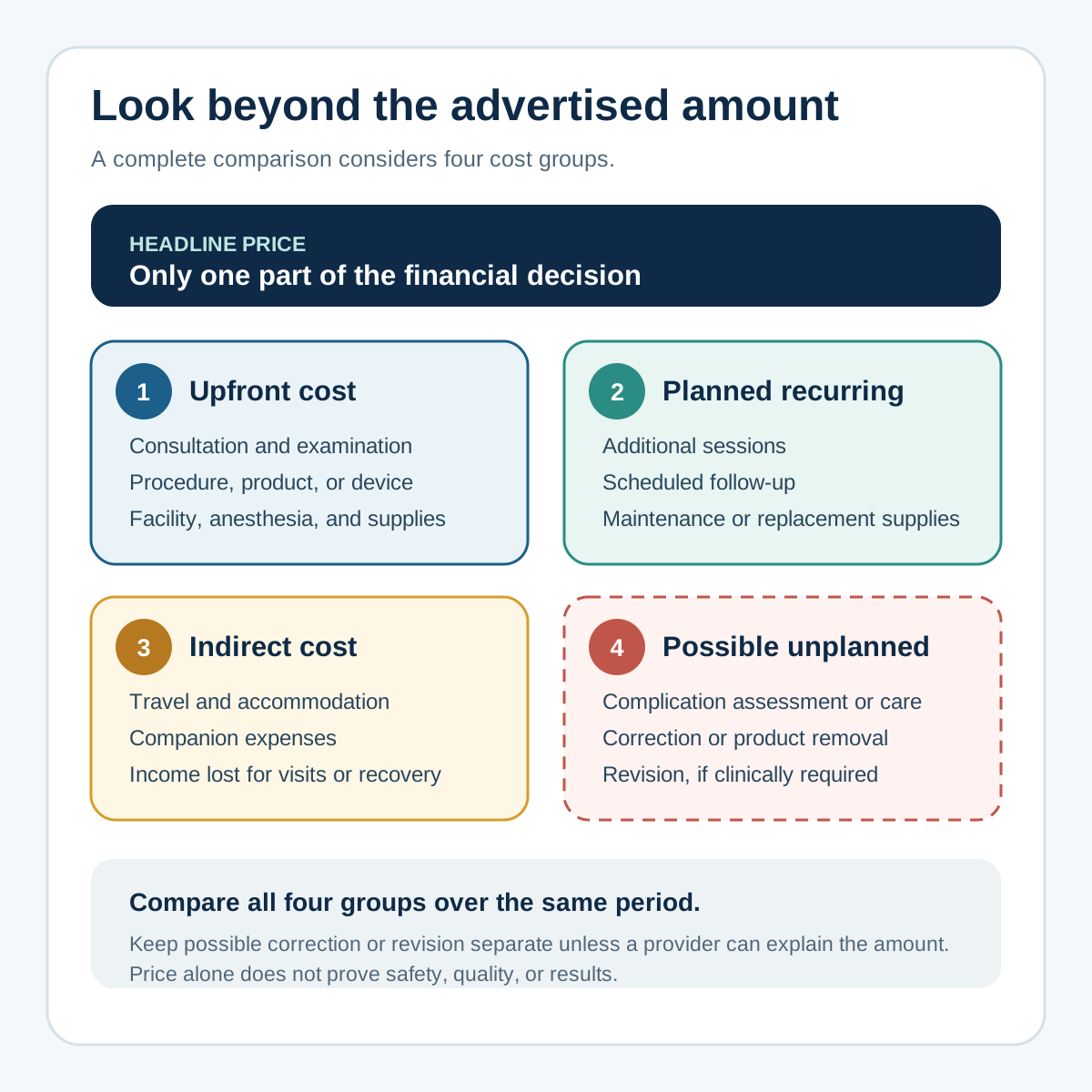
Break the total into four groups:
| Cost group | What to include |
| Upfront cost | Consultation, examination, procedure, product or device, facility, anesthesia, and supplies |
| Planned recurring cost | Additional sessions, scheduled follow-up, maintenance treatment, and replacement supplies |
| Indirect cost | Travel, accommodation, companion expenses, and income lost during appointments or recovery |
| Possible unplanned cost | Assessment and treatment of complications, correction, product removal, or revision |
The fourth category needs careful wording. It does not predict that a complication will occur. It reminds you to ask who will manage a problem, what that care may involve, and which expenses the original quote excludes.
Compare every quote in the same currency, location, treatment quantity, and period. A one-session price and a three-year plan do not answer the same question.
How Headline Prices Differ Across Penile Enlargement Options
Penile enlargement procedures do not produce the same type of change, follow the same schedule, or carry the same evidence. Start by comparing penis enlargement options, then examine what each quoted price covers.

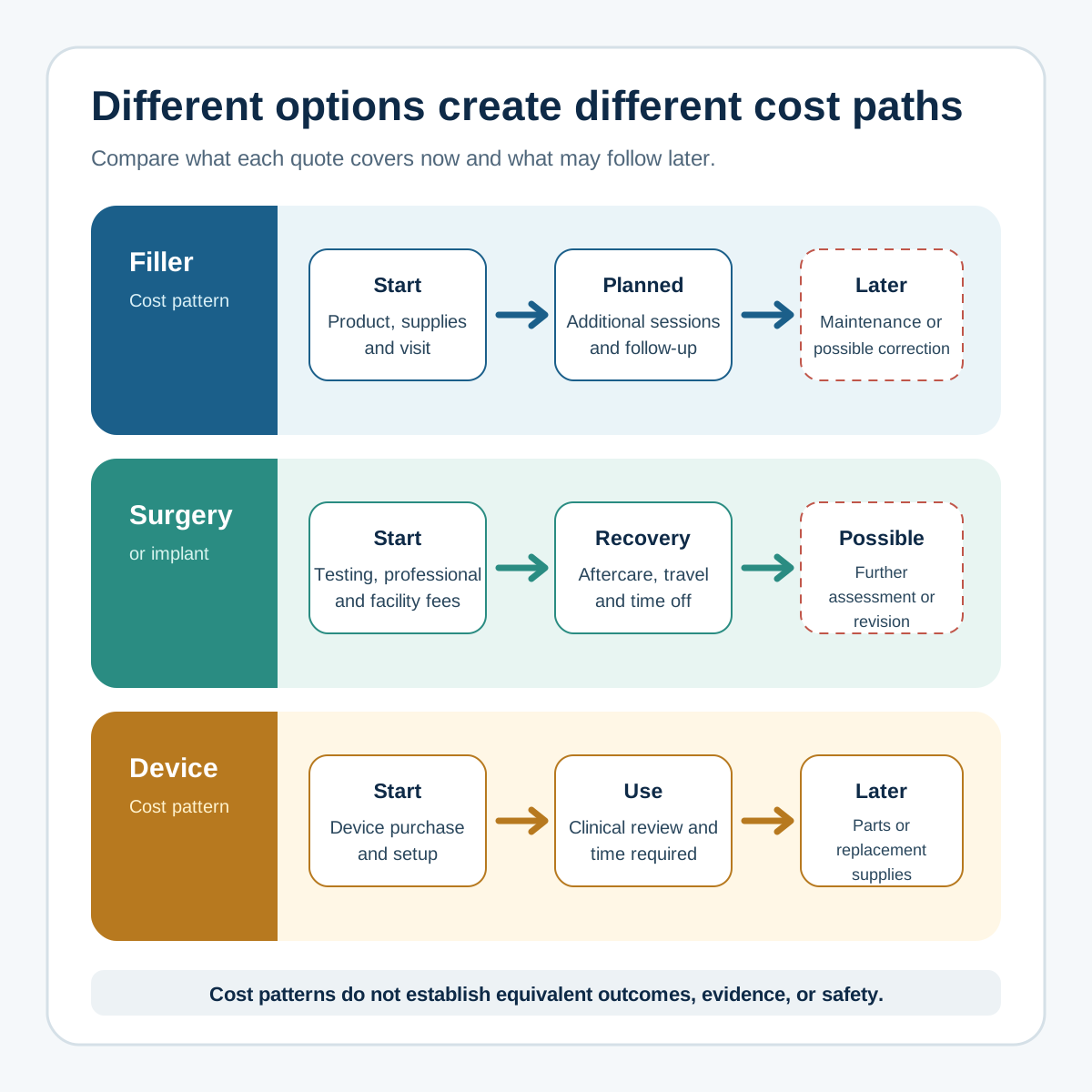
| Option | What the initial price may cover | Costs that may appear later | Evidence and safety question |
| Hyaluronic acid or another soft-tissue filler | Product, injector, supplies, and visit | More sessions, maintenance, correction, or removal | What supports this product and injection site? |
| Fat transfer or girth surgery | Surgeon, facility, anesthesia, and operative care | Testing, travel, follow-up, or revision | What guidance supports the technique? |
| Suspensory-ligament or lengthening surgery | Surgical and facility fees | Anesthesia, aftercare, time off, or revision | How may it affect length, stability, or function? |
| Cosmetic implant | Device and placement | Follow-up, removal, or revision | What long-term data support it? |
| Traction or vacuum device | Device purchase | Parts, clinical review, and time required | Does it target appearance, erectile function, or structural change? |
| PRP or another marketed injection | Fee per session | Repeat sessions and follow-up | Does evidence support enlargement? |
| No procedure | Clinical consultation, if sought | Usually no elective maintenance | Would another form of care address the concern? |
Dermal fillers require product-specific questions
Some clinics use dermal fillers for non-surgical penis enlargement. In the United States, the Food and Drug Administration lists approved dermal filler indications for specific facial areas and the back of the hand. Those approvals do not establish an approved penile enlargement indication.
Ask for the product name, amount, sessions, patient labeling, and proposed use. The FDA warns that removal may require further treatment and may prove difficult for some materials. These points affect risk and cost.
Surgery may carry costs that a headline fee omits
Surgery can add facility fees, anesthesia, testing, travel, time away from work, and postoperative care. The American Urological Association’s statement on penile augmentation surgery says subcutaneous fat injection for girth and suspensory-ligament division for length have not shown established safety or efficacy.
The statement has a narrow scope and does not assess every procedure. It shows why one label cannot support a reliable price comparison.
A device fee and a procedure fee do not buy the same outcome
Traction devices, vacuum devices, injections, and surgery differ in purpose and evidence. A vacuum device may support an erection or produce temporary fullness. Do not price it as though it offers the same result as a tissue procedure.
A PRP fee tells you what a clinic charges, not whether the treatment increases size. Ask for evidence that matches the goal, protocol, and follow-up period.
The Costs That Appear After the Initial Procedure
Most incomplete estimates miss one of four areas: assessment, treatment quantity, indirect expenses, or future care.
Consultation, assessment, and measurement
A responsible assessment may include medical and sexual history, medication review, examination, and standardized measurements. The clinician may also assess erectile function, previous procedures, scarring, expectations, and distress.
Ask whether the package includes the consultation and what you owe if the clinician decides not to proceed. Get the answer in writing.
Sessions, product quantity, and facility charges
Two filler quotes may use different product amounts or sessions. Surgical quotes may include different facility, anesthesia, testing, and postoperative services. Compare the units behind the amount.
For penis girth enhancement, ask whether the estimate covers the full planned course or only the first visit. Request separate figures for product, professional fees, supplies, and follow-up.
Travel, accommodation, and time away from work
Treatment outside your area can add transport, hotels, meals, and return visits. Recovery may affect income if your work involves lifting or prolonged movement.
Do not rely on a general promise of “minimal downtime.” Ask what the clinician expects for your procedure and type of work. Add those costs to the quote.
Maintenance, correction, and revision
Temporary treatments may require repeat care to maintain an effect. Surgical or implant procedures may need further assessment if healing, appearance, sensation, or function does not meet the clinical plan.
Ask the provider to separate maintenance from complication care. Confirm who pays for medication, imaging, product dissolution, operating-room charges, or revision. Get the policy in writing.
Calculate the Total Cost Over a Meaningful Time Period
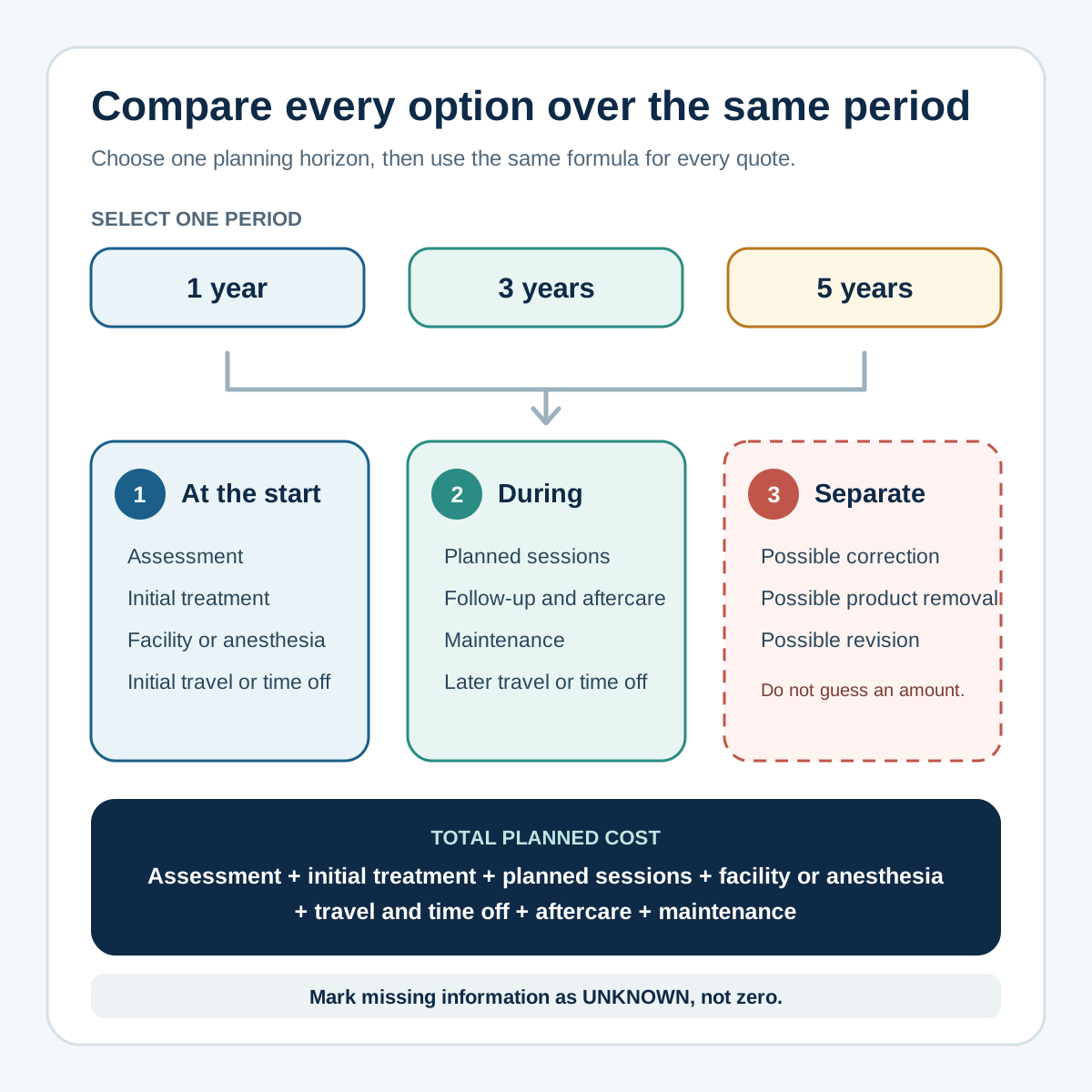
Choose a one-, three-, or five-year comparison period. Then use the same formula for every option:
Total planned cost = assessment + initial treatment + planned sessions + facility or anesthesia + travel and time off + aftercare + maintenance during the selected period
Keep possible correction or revision in a separate line. Do not add a generic complication percentage or guessed amount. Use only a figure that the provider can explain or an amount you choose as a personal financial contingency.
Record these details for each quote:
- procedure, product, device, or technique;
- planned sessions and amount per session;
- professional, facility, and anesthesia charges;
- follow-up, aftercare, and maintenance;
- travel, accommodation, and time away from work;
- correction, removal, and revision policy;
- refund, cancellation, and financing terms; and
- date, currency, and period covered.
Mark missing items as “unknown,” not zero. A blank field often means that the provider has not yet disclosed the cost.
Why the Cheapest Quote May Not Have the Lowest Total Cost
Price alone cannot tell you whether a provider has assessed you properly, selected an appropriate product, explained the evidence, or prepared to manage complications. It also cannot tell you whether the quote includes the treatment quantity needed to complete the agreed plan.
The reverse is also true. A high price does not prove better training, safer care, or a better result. Cost becomes useful only when you connect it to a named provider, defined procedure, itemized services, follow-up plan, and matching evidence.
The Sexual Medicine Society of North America position statement notes that cosmetic penile enhancement evidence remains limited. Much of the literature comes from small, single-center, or retrospective studies with restricted follow-up. That uncertainty should make consent more specific, not marketing more confident.
How to Compare Penile Enlargement Quotes and Providers
Use the same questions for every clinic. This prevents a polished consultation from replacing factual comparison.
- Who will assess me, perform the procedure, and manage complications?
- What are their current professional role, license, and relevant training?
- What exact product, device, or technique will they use?
- Is the proposed use approved for this body site, off-label, or investigational?
- What does the quote include and exclude?
- How many sessions does the current plan assume?
- What follow-up and maintenance does the provider recommend?
- How will the clinic measure change and discuss normal variation?
- What alternatives include no procedure?
- What happens if I develop pain, infection, skin changes, altered sensation, urinary problems, or erectile difficulty?
- How does the clinic protect intimate medical information and photographs?
Review The P Clinic’s treatment process and compare it with your written plan. Verify the clinician’s identity and role rather than relying on a general “medical team” label. The About page should match the consultation record.
Save the Consultation and Provider-Verification Checklist before requesting a quote.
When Professional Assessment Matters More Than a Price Estimate
A calculator cannot determine whether treatment suits you. It cannot diagnose micropenis, buried penis, Peyronie’s disease, erectile dysfunction, scarring, or body dysmorphic disorder. It also cannot decide whether the expected change justifies the medical and financial burden.
The European Association of Urology guideline recommends a medical and sexual history, physical examination, penile measurement, and body dysmorphic disorder screening when appropriate. It recommends mental health referral when a clinician suspects the disorder.
That assessment should not dismiss a cosmetic concern. It should separate appearance, function, anatomy, distress, and expectations so you can make a decision based on your actual situation.
Compare the Full Cost Before You Decide
Use an itemized quote, a consistent period, and a provider-verification checklist. Treat unknown costs as unanswered questions. Price alone cannot prove care quality.
After reviewing the evidence and alternatives, request a private consultation for an individual assessment and current written estimate. Ask the clinician to explain the proposed treatment, its regulatory status, expected maintenance, material risks, and the clinic’s plan for follow-up or complications before you commit.
Frequently Asked Questions
What is included in penis enlargement cost?
Include consultation, examination, treatment, product or device, facility and anesthesia fees, follow-up, maintenance, travel, time away from work, and possible correction or revision. Compare quotes over the same period.
How much does penile enlargement cost?
No single figure applies across fillers, devices, surgery, implants, and other treatments. Request an itemized estimate that states the procedure, quantity, sessions, included care, and maintenance period.
When should I compare total cost instead of the procedure price?
Use total cost whenever options differ in treatment sessions, maintenance, travel, recovery, or follow-up. A procedure price alone cannot show the full one-, three-, or five-year burden.
Who should assess whether a penile enlargement procedure is appropriate?
A licensed clinician with relevant training should assess your health, anatomy, function, goals, and risks. Verify the person’s role, license, experience, and plan for managing complications.
What should a written penile enhancement quote show?
The quote should identify the treatment, product or device, quantity, sessions, fees, aftercare, follow-up, maintenance, exclusions, cancellation terms, and correction or revision policy.
Can correction or revision increase the total cost?
Yes, it can. The amount depends on the clinical problem, procedure, material, provider policy, and care required. Ask which services the original fee covers before treatment.
Does PRP reliably enlarge the penis?
A clinic’s price for PRP does not prove that it increases penile size. Ask for evidence that examines enlargement with the same preparation, injection protocol, measurement method, and follow-up period.
Are dermal fillers cheaper than penile enlargement surgery?
They may cost less upfront, but product quantity, staged sessions, maintenance, facility or anesthesia fees, and possible correction can change the comparison. Use the same period.
How often do penile fillers require maintenance?
There is no universal schedule. Material, technique, tissue response, treatment goal, and available evidence all affect duration. Ask the clinician to support the proposed maintenance plan with product-specific information.
How much does it cost to increase penile girth?
The estimate depends on the method, product amount, sessions, provider, location, facility needs, follow-up, and maintenance. Ask whether the price covers the planned course.
Does The P Clinic provide an itemized cost estimate?
Ask The P Clinic for a current written estimate. Confirm the package, sessions, inclusions, exclusions, maintenance, financing terms, and revision policy during the consultation.
What should I do before booking a penile enhancement procedure?
Review the evidence and risks, obtain an individual assessment, verify the provider and product, compare written quotes, and confirm follow-up arrangements. Do not book based on price or before-and-after images alone.
Medical References
- Sexual Medicine Society of North America: Cosmetic Penile Enhancement Procedures position statement
- European Association of Urology: Penile Size Abnormalities and Dysmorphophobia
- American Urological Association: Penile Augmentation Surgery
- U.S. Food and Drug Administration: Dermal Fillers
- Nonsurgical Methods for Penile Augmentation: A Systematic Review