
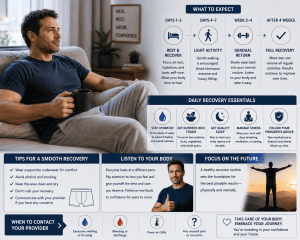
The procedure is one part of the process. What happens in the days and weeks afterward shapes the final result just as much — and it’s worth getting right.
Recovery from girth enhancement — whether hyaluronic acid filler, fat transfer, or another approach — involves a specific set of considerations that differ meaningfully from, say, recovering from a gym workout or a minor surgical procedure elsewhere in the body. The healthy recovery habits after male enhancement described in this guide reflect the current understanding of what supports optimal outcomes in the weeks following treatment.
This isn’t a substitute for your provider’s specific instructions — those always take priority. But it gives you a useful framework for understanding the why behind the guidance you’ll receive, which tends to make following it easier and more intentional.
The First 24 to 48 Hours: Setting the Foundation
The immediate post-procedure window is the most critical for outcome quality. The filler or transferred material is settling into position during this period, and your behavior directly affects how it settles.
Rest Is Genuine Medicine Here
Most providers recommend minimal physical activity for the first 24 to 48 hours — and this is worth taking seriously rather than interpreting loosely. Increased blood flow to the treated area from physical exertion can exacerbate swelling, affect material distribution, and in the case of filler-based procedures, influence how the product integrates with surrounding tissue during this critical early window.
This doesn’t mean bed rest. It means avoiding exercise, strenuous activity, and anything that significantly elevates your heart rate. A walk is fine. A gym session is not. The distinction matters, and most patients who understand why they’re following this restriction find it easier to comply with than those who just received the instruction without context.
Avoid Heat Exposure
Hot showers, hot baths, saunas, and prolonged sun exposure to the treated area should be avoided for at least 48 to 72 hours post-procedure. Heat dilates blood vessels and increases local circulation, which can intensify swelling and, for filler-based procedures specifically, may affect product consistency and distribution during the critical early settling phase. Lukewarm showers are fine. High-heat exposure is not.
No Sexual Activity for the Recommended Window
Your provider will specify the recommended abstinence period — typically two to four weeks for most girth enhancement procedures, though this varies by technique and individual circumstances. This isn’t excessive caution. Friction, pressure, and the vascular changes associated with sexual activity during the early healing window can affect filler distribution and healing tissue integrity in ways that materially influence the final result. Following this guidance is one of the more impactful things you can do for outcome quality.
“Recovery isn’t passive. The choices you make in the first few weeks after a procedure are part of the procedure’s result.”
Week One: Supporting Healing From the Inside
Healing support routines after girth enhancement aren’t complicated, but they do require some consistency. The body’s healing response is significantly influenced by systemic factors — hydration, nutrition, sleep, and stress levels all affect how efficiently tissue heals and how the treated area recovers.
Hydration Is More Important Than You Think
Hyaluronic acid, the most common filler material used in girth enhancement, is hydrophilic — it attracts and retains water. Adequate hydration during the recovery period supports appropriate filler integration and helps maintain the plumpness that makes results look natural. This isn’t a recommendation to drink extraordinary amounts of water, just to maintain consistently good hydration rather than the intermittent pattern that most people slip into when they’re not paying attention. Eight to ten glasses a day is a reasonable baseline; more if you’re active or in a warm climate.
Anti-Inflammatory Nutrition
Some degree of swelling after girth enhancement is normal and expected. What you eat during the first week can either support the body’s management of that swelling or work against it. Foods that generally support an anti-inflammatory response include fatty fish, leafy greens, berries, turmeric, ginger, and nuts. Foods that tend to promote inflammation — highly processed foods, excessive alcohol, refined sugar in large quantities — are worth moderating during the first week in particular.
This isn’t a strict dietary prescription. It’s a nudge toward the kinds of foods that already support general health and that have some evidence behind them for supporting tissue recovery specifically. You don’t need to overhaul your diet. A week of slightly more intentional eating is all this requires.
Alcohol and Certain Medications
Alcohol is generally advised against in the first 24 to 72 hours post-procedure — it dilates blood vessels, can intensify swelling, and is a mild blood thinner. NSAIDs (aspirin, ibuprofen, naproxen) should be avoided unless specifically directed by your provider, as they inhibit platelet function and can increase bruising. Acetaminophen is typically acceptable for pain management if needed. Your provider’s medication guidance should always take precedence over general advice.
Weeks Two Through Four: The Integration Phase
The second through fourth weeks post-procedure are the integration phase — when swelling has mostly subsided, the treated area is settling into its final shape, and the tissue is completing the structural work of incorporating the treatment material.
Gradual Return to Normal Activity
Most patients can return to light exercise in the second week and more vigorous activity by weeks three to four, depending on their specific procedure and their provider’s guidance. The return to activity should be gradual rather than abrupt. The first workout back after a recovery period isn’t the day to push hard — it’s the day to assess how the treated area feels during activity and report any unusual sensations to your provider.
Compression and Support Garments
Some providers recommend brief-style underwear or light compression garments during the recovery period — particularly for the first two weeks. The rationale is to support the treated area and minimize movement-related disruption to the settling material. This isn’t universally prescribed, and the specific recommendation varies by provider and procedure type. If your provider recommends it, use it consistently rather than selectively — the benefit compounds with consistent use.
Follow-Up Appointments Are Not Optional
The post-procedure follow-up is where your provider assesses how the treatment is integrating, identifies any early concerns that are better addressed sooner than later, and confirms whether the result is tracking toward the goals established in the treatment plan. Skipping or delaying follow-ups because everything feels fine is a common mistake. Things can look fine subjectively while an early adjustment would significantly improve the final outcome. Keep the appointments.
Days 1-2: rest, minimal activity, no heat, no alcohol, ice if directed.
Days 3-7: normal low-activity daily life, hydration and anti-inflammatory nutrition focus, no exercise or sexual activity.
Week 2: light activity returns, follow-up appointment, continue avoiding strenuous exercise.
Weeks 3-4: gradual return to normal activity as guided by provider.
Month 2: most swelling resolved, results visible, sexual activity typically permitted per provider guidance.
These timelines are approximate and should always be confirmed by your specific provider based on your procedure and individual healing.
Managing Swelling and Bruising: What’s Normal
Some swelling and mild bruising after girth enhancement is normal and expected, not a sign that something has gone wrong. Understanding the typical course of these effects helps patients stay calm and makes it easier to identify if something genuinely does require attention.
Swelling is generally most pronounced in the first 48 to 72 hours and typically begins to resolve meaningfully by the end of the first week. Some residual swelling may persist for two to four weeks, particularly for larger volume procedures. The area may appear fuller immediately post-procedure than it will appear once swelling resolves — this is expected and is why providers are careful about setting expectations at the one-week mark versus the six-week mark.
Bruising, when present, typically peaks around days two to four and resolves over the following one to two weeks. Arnica — topically or as a supplement — has some evidence supporting its use in reducing post-procedure bruising, and many providers recommend it. Ask your provider whether it’s appropriate for your specific situation before using it.
What Should Prompt a Call to Your Provider
Most recovery is uneventful. But certain signs warrant immediate contact with your provider: severe or worsening pain after the first 24 hours (rather than gradually improving), unusual warmth or redness in a localized area that is increasing rather than decreasing, fever, significant asymmetry that wasn’t present immediately after the procedure, or any sensation of vascular compromise. These are uncommon, but prompt communication is always the right response when something feels wrong.
Long-Term Aftercare: Maintaining and Optimizing Results
Enhancement aftercare strategies for the longer term — beyond the immediate healing window — focus on maintaining the results and supporting the body’s ongoing integration of the treatment material.
For filler-based procedures specifically, the longevity of results is influenced by individual metabolism, lifestyle factors, and the specific product used. Maintaining good general health — adequate hydration, regular exercise, healthy nutrition — supports result longevity. Significant weight changes can affect the appearance of results, which is worth discussing with your provider at follow-up.
For patients who are considering maintenance treatments (touch-up or addition filler appointments to maintain the result as it naturally diminishes over time), the timing and approach should be planned with your provider rather than decided unilaterally. Appropriate maintenance is part of a long-term strategy, not a sign that the initial procedure didn’t work.
For patients who want to review the full overview of girth enhancement procedures and what they involve — including procedure details, expected outcomes, and how recovery fits into the overall process — that resource covers the complete picture. And for information about the practice, consultation process, and how to take the first step, the girth enhancement clinic is the right starting point.
Frequently Asked Questions
How long does recovery from girth enhancement typically take?
The immediate recovery period — when activity restrictions and most behavioral guidelines are in effect — is typically two to four weeks depending on the procedure and individual healing rate. Most swelling resolves within two to four weeks, and the final result is generally assessable at the six-to-eight-week mark, when integration is complete and residual swelling has fully subsided. For fat transfer procedures, the timeline is somewhat longer, as the transferred material requires additional time to establish vascular supply and reach its stable final volume.
What activities should I avoid during girth enhancement recovery?
During the first one to two weeks: vigorous exercise, strenuous physical activity, heat exposure (saunas, hot baths, prolonged hot showers), alcohol, NSAIDs, and sexual activity. The specific restrictions and their duration should be confirmed with your provider, as they vary by procedure type and individual circumstances. Light walking and normal daily activity are generally permitted from the first day. The return to full normal activity is gradual rather than immediate, typically spanning two to four weeks post-procedure.
Is swelling after girth enhancement normal?
Yes, and it’s expected with virtually all girth enhancement procedures. Some degree of swelling and mild bruising in the treated area is a normal response to any injectable or surgical procedure. Swelling is typically most pronounced in the first 48-72 hours and gradually resolves over the following one to four weeks depending on the procedure and the individual. The area may appear fuller immediately after treatment than it will look once swelling has resolved — this is normal and is why experienced providers are careful about setting expectations at different points in the healing timeline.
How does hydration affect girth enhancement recovery?
For hyaluronic acid filler procedures specifically, hydration is directly relevant — HA is hydrophilic and maintains its volume and texture partly through attracting water molecules. Consistent good hydration supports appropriate integration and helps maintain the natural feel and appearance of the result. More broadly, adequate hydration supports all tissue healing through better cellular function, waste clearance, and circulation. The practical recommendation is consistent daily hydration — eight to ten glasses of water — rather than extraordinary intake.
When can I resume sexual activity after girth enhancement?
The recommended abstinence period varies by procedure and provider, typically ranging from two to four weeks for most girth enhancement approaches. This restriction exists because friction, pressure, and the vascular changes associated with sexual activity during the early healing window can affect filler distribution and tissue recovery in ways that influence the final result. Your provider’s specific guidance should always take precedence — follow their timeline rather than estimating based on how the area feels, as healing progress isn’t always visible from the surface.
What signs during recovery should I report to my provider immediately?
Contact your provider promptly if you experience: severe or worsening pain after the first 24 hours (as opposed to gradually improving discomfort), unusual warmth or redness in a localized area that is increasing rather than resolving, fever, significant asymmetry that wasn’t present immediately after the procedure, any sensation of skin color change or vascular compromise in the treated area, or any other symptom that concerns you or that your provider specifically told you to watch for. Most recoveries are uneventful, but prompt communication is always the right response when something feels unexpected or worrying.