
Most men who eventually book a girth enhancement consultation spend months, sometimes years, thinking about it before they make the call. There’s no rule that says you need to wait that long — and there’s also no rule that says you should rush. Here’s how to know when you’ve actually reached the point worth acting on.
Sign One: The Concern Is Specific, Not Diffuse
The single most reliable indicator of consultation readiness is whether you can articulate the concern specifically. “I want more girth” is a starting point, but it’s not specific enough to drive a productive conversation. A specific concern sounds more like: “I’ve noticed a particular area where I’d like more volume,” or “I’m comparing myself to a standard I’ve had in mind for a while and want to understand if treatment could close that gap.”
If you find yourself able to describe what you want changed with some precision — even if you can’t yet describe exactly how much or exactly what the procedure would involve — you’re at the point where a consultation can actually be productive. The provider’s job during the consultation is to translate your specific goal into a realistic clinical plan; they can’t do that work if the goal itself isn’t yet specific.
“The men who get the most out of a first consultation walk in already knowing what they’re trying to change. The provider’s job from there is feasibility and method — not figuring out what you want in the first place.”
Sign Two: You’ve Done Baseline Research and Have Real Questions
Consultation readiness shows up in the quality of questions a person brings to the appointment. Men who’ve done some baseline research — understanding broadly what HA filler-based girth enhancement involves, roughly what the recovery process looks like, and what the general cost range is — arrive at the male enhancement clinic with specific questions rather than needing the entire procedure explained from zero.
This isn’t a requirement — providers expect to explain the basics regardless of how much research a patient has done. But patients who’ve done some preparation get more value from the consultation time because they can spend it on their specific situation rather than on general education they could have gotten from a reputable source beforehand. If you’ve reached the point where general information searches aren’t answering your remaining questions — questions that are specific to your anatomy, your history, or your particular goals — that’s a sign you’re ready for the conversation that only a consultation can provide.
Sign Three: You Understand This Is a Process, Not an Event
Readiness for a productive consultation includes psychological readiness for what the enhancement actually involves — not a single transformative event, but a process that includes the assessment, the treatment plan, the procedure, the recovery period, the settling-in period over the following weeks, and potentially follow-up treatment to maintain results over time.
Patients who expect the consultation to produce an immediate same-day procedure, or who expect the result to be fully visible and final immediately after treatment, are working from an inaccurate model of how this works. If you’ve adjusted your expectations to understand the actual timeline — including the weeks it takes for swelling to resolve and the result to settle into its true form — you’re better positioned for both the consultation conversation and the experience that follows it.
What “Process” Means Practically
The process from initial research to final settled result typically spans: the consultation itself (60 minutes or more for a thorough first visit), a decision period after the consultation (some patients decide immediately; others take weeks to think it over), the procedure day itself (typically under an hour for the treatment), an initial recovery period of several days to two weeks, and a settling period of up to six weeks before the result reaches its stable final form. Understanding this timeline before the consultation means you’re asking the provider about the right things — not just “what will it look like” but “what will it look like at each stage.”
Sign Four: You’ve Thought Through the Practical Logistics
Practical readiness matters alongside psychological readiness. Have you thought through the time off you’d need for the procedure and initial recovery? Do you have a realistic sense of the cost range and how you’d pay for it? Have you considered the timing relative to any upcoming events, travel, or physical activities (including intimate activity) that the recovery period would need to accommodate?
These are practical questions that a consultation will help you answer specifically, but coming in with a general sense of your own logistics — rather than discovering for the first time during the consultation that you have a major trip in three weeks that the recovery timeline would conflict with — produces a smoother planning conversation.
Sign Five: The Motivation Is Stable, Not Reactive
This is the sign that’s worth the most honest self-reflection. Motivation for cosmetic procedures that’s stable — rooted in a longstanding, specific concern that you’ve thought about over time — tends to produce more satisfying outcomes than motivation that’s reactive to a recent specific event (a breakup, a specific comment from a partner, a recent comparison that triggered acute insecurity).
This isn’t to say reactive motivation automatically disqualifies someone from being a good candidate — but it’s worth pausing on. If your interest in girth enhancement has emerged or intensified sharply in the last few weeks in response to a specific event, giving yourself some time before scheduling the consultation — not as a barrier, but as a way of confirming the motivation has some stability to it — tends to produce a clearer decision-making process. If you’ve been thinking about this for months or years and a recent event simply prompted you to finally act, that’s different — that’s stable motivation finally getting acted on, not motivation that just appeared.
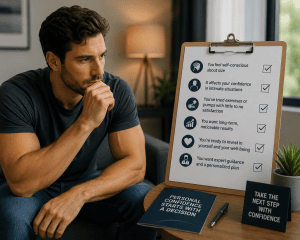
Can you articulate the specific concern, not just a general desire for “more”?
Have you done baseline research and have specific remaining questions?
Do you understand this is a multi-week process, not a single event?
Have you thought through time off, cost, and timing relative to upcoming events?
Has the motivation been present for a meaningful period, or is it freshly reactive to a recent event?
If most of these are yes, you’re likely ready for a productive first consultation.
What Happens If You’re Not Quite Ready Yet
None of this is meant to gatekeep the consultation itself — a good consultation can actually help with several of these readiness factors. A provider can help specify a vague concern through the physical assessment and goal conversation. They can answer the baseline questions you haven’t found through your own research. Scheduling a consultation before you feel fully “ready” by every measure above is entirely reasonable; the consultation itself is part of the process of getting ready, not just the reward for having already arrived.
What matters most is approaching the consultation with honesty about where you actually are — your specific concern, your current questions, and your actual motivation — rather than performing readiness you don’t yet feel. A good provider works with where you actually are, not where you think you’re supposed to be.
For men in the Colleyville, Texas area considering whether they’re ready for this conversation, expert penile enhancement for confidence and vitality in Colleyville provides the consultation experience designed to meet patients exactly where they are in this process. For the full picture of the clinic’s approach to patient readiness and treatment planning, the girth enlargement clinic is the right starting point for anyone beginning their research.
Frequently Asked Questions
Does scheduling a consultation mean I have to go through with the procedure?
No. A consultation is an information-gathering and assessment appointment, not a commitment to proceed with treatment. The consultation gives you a physical assessment, a discussion of your specific goals, an explanation of what the treatment plan would involve for your anatomy, and the opportunity to ask questions — all of which inform your decision about whether and when to proceed. Many patients schedule a consultation specifically to get this information and then take time afterward to decide, sometimes weeks or months. There’s no obligation created by scheduling or attending a consultation.
What should I bring to my first girth enhancement consultation?
Bring a clear sense of your specific goal — what you want to change and, if you can articulate it, roughly what outcome you’re hoping for. Bring your medical history information, including current medications and supplements (this affects the safety assessment). Bring any specific questions you’ve developed from your own research. If you’ve had prior procedures in the area (from any provider), be prepared to discuss them honestly, as this affects the current assessment. You don’t need to have all the answers or a perfectly formed plan — the consultation is designed to help develop that — but coming with as much clarity as you have produces a more productive conversation.
How do I know if my expectations for girth enhancement are realistic?
This is precisely one of the things a thorough consultation is designed to assess and calibrate. A good provider will discuss your specific goals against what’s achievable for your particular anatomy during the physical assessment, giving you a realistic picture rather than either dismissing your goals or overpromising results. Before the consultation, useful self-calibration includes understanding that HA filler results are temporary (typically 12-24 months) rather than permanent, that the final result takes approximately six weeks to fully settle, and that volume changes are generally moderate and proportional rather than dramatic. If your expectations significantly exceed these general parameters, the consultation conversation is exactly where that gets addressed honestly.
Is it normal to feel nervous about scheduling a consultation?
Yes, this is a common and understandable feeling given the personal and somewhat private nature of the topic. Most men report that the consultation itself is considerably less uncomfortable than they anticipated — experienced providers handle these conversations professionally and routinely, treating the discussion with the same clinical normalcy as any other medical consultation. The anticipatory anxiety before scheduling is usually more significant than the actual experience of the appointment. If nervousness is the only thing holding you back from scheduling and you’ve otherwise reached a point of genuine interest and specific goals, that nervousness alone isn’t a reason to avoid getting the information a consultation provides.
How long does a girth enhancement consultation typically take?
A thorough first consultation typically takes 30 to 60 minutes or more, covering the physical assessment, medical history review, goal discussion, and treatment plan explanation. Providers who move through this more quickly than that range are likely not conducting the thorough assessment that good candidacy and treatment planning requires. The time investment in a proper first consultation is itself one of the signals of a provider’s quality and seriousness about individualized treatment planning, as discussed in other guidance about what makes a successful treatment outcome.
Should I wait until I’m completely sure before scheduling a consultation?
Not necessarily. The consultation itself is part of the process of becoming sure — it provides information, physical assessment, and direct answers to specific questions that general research can’t fully address. Waiting until you have complete certainty before scheduling can mean waiting indefinitely, since some uncertainty about a personal medical decision is normal and often isn’t fully resolved until you have the specific, individualized information a consultation provides. A more useful threshold than “complete certainty” is whether you have a specific concern, some baseline understanding, and genuine interest in learning more about whether this is the right path for you. If you meet that bar, scheduling a consultation is a reasonable next step regardless of remaining uncertainty.