

“Bigger” can describe several different outcomes on a surgical website. One procedure may change the flaccid hang, another may add shaft volume, and another may expose more of the existing penis without changing penile tissue.
This guide compares penis enlargement surgery by outcome, evidence, complications, recovery, and revision burden. It also separates cosmetic augmentation from functional or reconstructive care.
Key takeaway: No single operation produces every type of size change. Compare the exact measurement, strength of evidence, risks, and options after an unsatisfactory result before judging any procedure claim.
What Types of Penis Enlargement Surgery Exist?
Websites use penis enlargement surgery to describe procedures that target apparent length, girth, or visible shaft. Each category changes something different:
- Length-oriented surgery: Suspensory ligament release aims to make more of the penis hang outside the body when flaccid.
- Girth-oriented procedures: Fat transfer, injectable fillers, grafts, and subcutaneous sleeves aim to add shaft volume.
- Shaft-exposure surgery: Suprapubic fat removal and buried-penis reconstruction can uncover more of the existing shaft.
- Total penile reconstruction: Surgeons may reconstruct a penis after severe trauma or for certain congenital conditions. This is not routine cosmetic enlargement.
Clinics sometimes group fillers with surgery, although fillers use injections. Penile prostheses also belong in a separate category because they primarily treat erectile dysfunction.
The 2026 International Consultation on Sexual Medicine recommendations stress these distinctions because the diagnosis, goal, evidence, and risk profile determine the appropriate pathway. Readers comparing surgery with other approaches can first review which penis enlargement methods work.
Surgery-by-Outcome Matrix: What Each Procedure Aims to Change
The table below compares procedures by outcome, not by promotional name. It does not rank or recommend treatments.
| Procedure category | Intended outcome | What may change | What it does not establish | Evidence status | Main limitation or risk | Revision question |
| Suspensory ligament release | More apparent flaccid length | Flaccid hang or erection angle | Predictable erect-length or functional gain | Limited and technique-specific | Scarring, instability, altered angle, or injury | What if the ligament heals again or erections become less stable? |
| Suprapubic or buried-penis surgery | More visible shaft | Exposure of existing length | Growth of penile tissue | Indication-specific | Wound problems, contour change, or recurrence | How would the team manage recurrence? |
| Autologous fat injection | Greater shaft girth | Volume and contour | Predictable retention or symmetry | Variable and technique-specific | Resorption, nodules, asymmetry, calcification, or infection | Can the surgeon correct irregularity or remove tissue? |
| Dermal or other fillers | Greater shaft girth | Product-dependent volume | Equal safety, durability, or regulatory status across products | Product-specific | Swelling, nodules, migration, inflammation, infection, or tissue injury | What product will the clinician use, and how would they treat complications? |
| Graft, scaffold, or sleeve | Greater girth or altered contour | Added material around the shaft | Guaranteed size, function, or reversibility | Limited; some approaches remain experimental | Fibrosis, migration, erosion, deformity, infection, or difficult removal | Who handles removal, and what tissue changes might remain? |
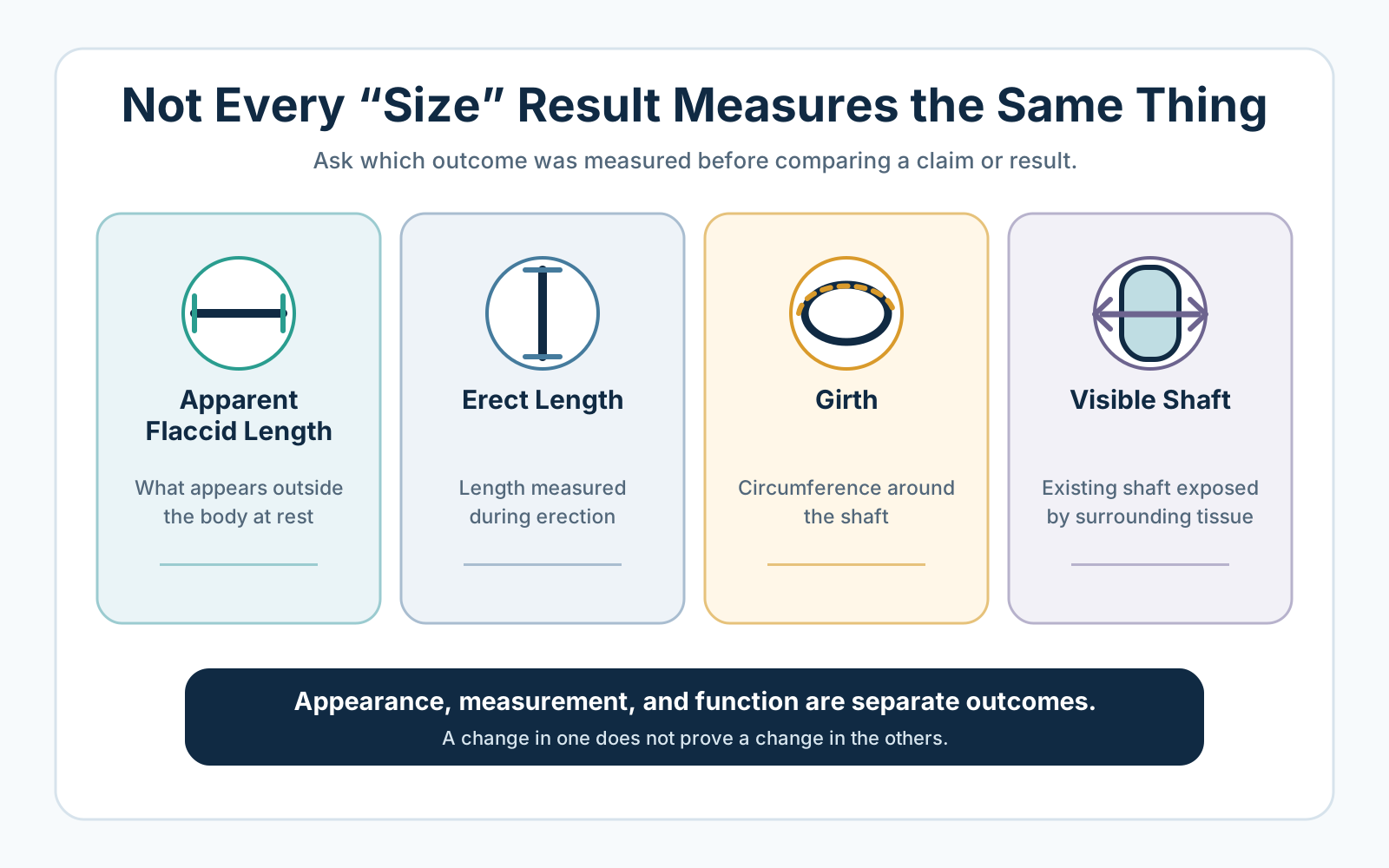
The matrix exposes a common problem in penis enlargement surgery results. Flaccid appearance, erect length, visible shaft, girth, erection quality, and sexual satisfaction remain separate outcomes.
For claims about lasting change, compare the procedure with the evidence reviewed in permanent penis enlargement options.
What Does Penis Enlargement Surgery Actually Change?
Result claims only make sense when the provider defines the measurement. Flaccid length, stretched length, erect length, girth, shaft exposure, and erection angle describe different outcomes.
Timing also matters. Swelling, resorption, scarring, tissue settling, and implant position can change appearance over time. A single photograph cannot show this sequence.
Ask how the clinician measures length and girth, controls erection state, and selects the follow-up point. A useful number should identify the patient group, technique, timing, and outcome range.
Size also has a wide normal range. A clinician should use standardized measurement and the patient’s actual concern rather than assumptions from photographs or self-measurement. The guide to average penis length and measurement explains why technique and context affect interpretation.
What Does the Evidence Say About Penis Enlargement Surgery?
Penis enlargement surgery evidence remains uneven across procedures. Some studies report changes in length or girth, but differences in technique, measurement, patient selection, and follow-up make broad conclusions difficult.
A 2024 systematic review of penile augmentation surgery found wide variation in methods, outcomes, complications, and quality-of-life reporting. The 2026 ICSM recommendations also identify limited standardization and gaps in long-term comparative evidence.
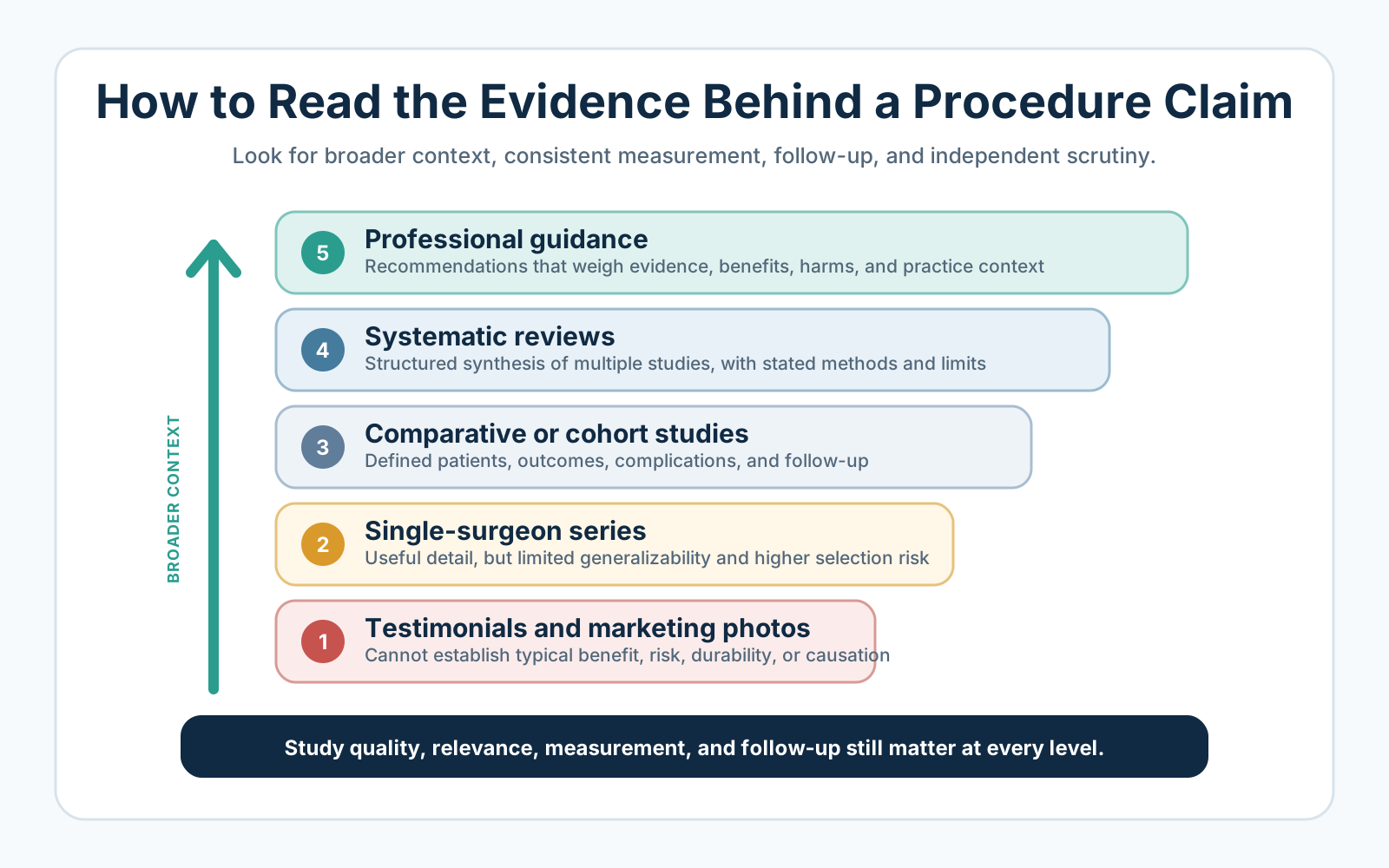
That does not prove that every procedure fails. It means a result from one surgeon, product, or patient group may not predict what another patient will experience. Evidence from reconstructive surgery also cannot automatically support the same operation for a person with normal anatomy who seeks cosmetic change.
The American Urological Association statement on penile augmentation says that subcutaneous fat injection for girth and suspensory ligament division for length have not shown established safety or effectiveness. The site’s penis enlargement evidence review explains how to weigh society statements, systematic reviews, clinical series, and marketing material.
What Are the Risks of Penis Enlargement Surgery?
Risk depends on the procedure, material, surgical plane, patient factors, and clinician’s experience. Complications can include pain, swelling, bleeding, wound problems, infection, scarring, irregular contour, altered sensation, deformity, erectile problems, and dissatisfaction.
Length-oriented surgery can change support or erection angle. Fat transfer can produce resorption, nodules, calcification, or uneven contour. Fillers can cause product-specific inflammatory reactions, migration, infection, vascular injury, or tissue damage. Grafts and sleeves can create fibrosis, displacement, erosion, curvature, or removal problems.
The Cleveland Clinic overview lists infection, scarring, pain, altered sensation, erectile dysfunction, deformity, and additional surgery. A complication study also describes deformity, shortening, masses, infection, nonhealing wounds, and sexual dysfunction.
Removal Does Not Always Restore the Starting Point
A removable product does not guarantee a return to baseline. Removal may leave scarring, contour change, tissue loss, altered sensation, or a need for reconstruction.
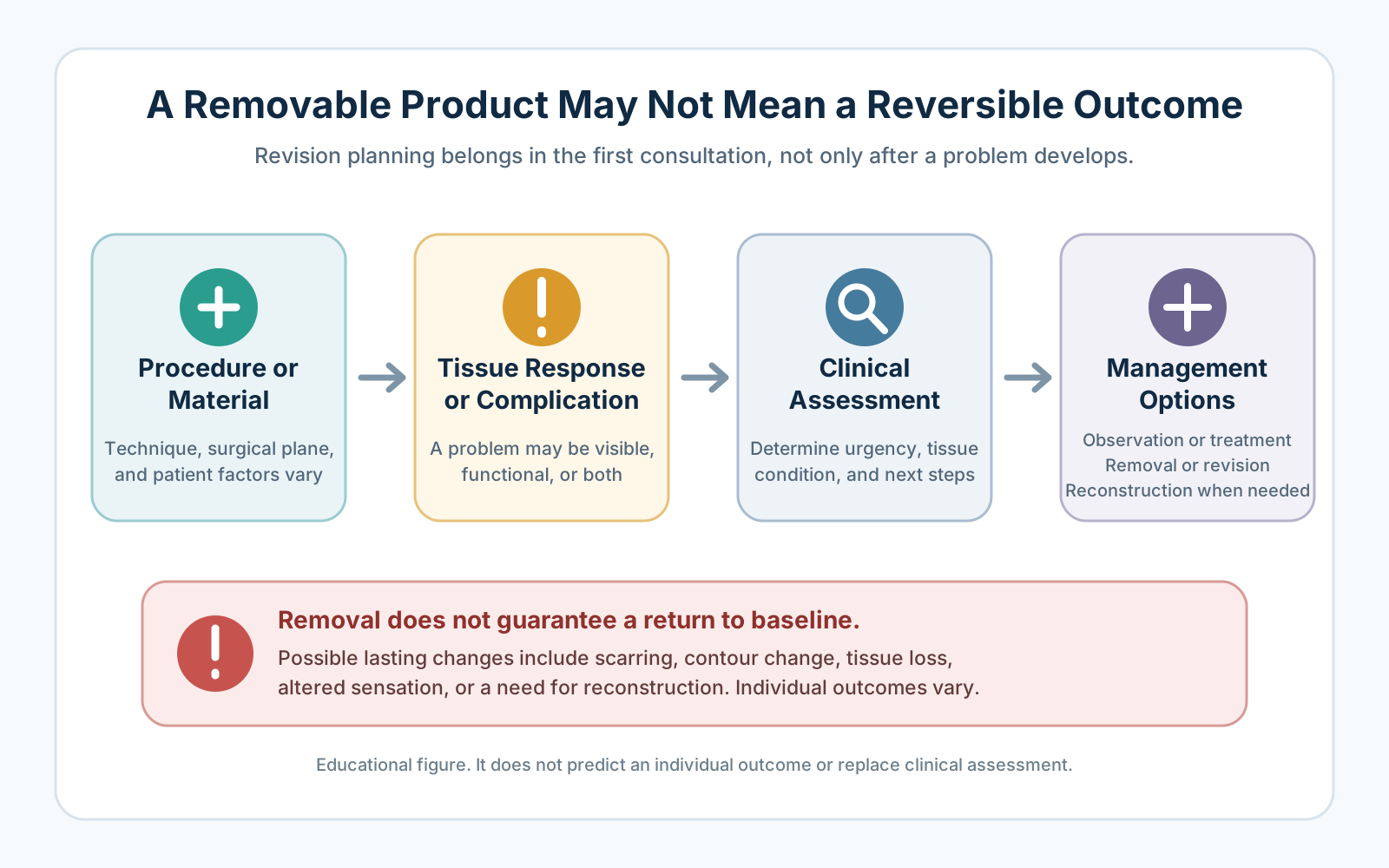
Ask who would manage a complication, whether that clinician can perform reconstruction, and which costs the quoted price excludes. Revision planning belongs in the first consultation, not only after a problem develops.
Risk Language Can Hide Uncertainty
Treat phrases such as “risk-free,” “painless,” “no complications,” or “guaranteed results” as warning signs. A credible explanation names the complications, explains uncertainty, and states how the clinical team handles follow-up and revision.
What Is Recovery Like, and What Follow-Up May Be Needed?
No single recovery timeline applies to every procedure. Recovery depends on the operation or injection, wound size, material, anesthesia, healing, work demands, and complications.
A recovery plan should cover wound care, pain, swelling, activity, work, sexual activity, follow-up, and outcome measurement. Follow the operating clinician’s written instructions.
Contact the treating team if symptoms worsen or if fever, increasing redness, marked swelling, wound drainage, severe pain, or difficulty urinating develops. These symptoms do not identify one complication by themselves, but they require clinical assessment.
Total cost may also include time away from work, travel, follow-up, medication, devices, and possible revision.
Who May Need Functional or Reconstructive Assessment Instead?
A concern about size does not identify the underlying condition. Micropenis, adult-acquired buried penis, congenital differences, trauma, Peyronie’s disease, erectile dysfunction, and distress about normal anatomy require different evaluations.
Buried-penis surgery may expose a normal-sized shaft hidden by surrounding tissue or skin. Reconstructive surgery may aim to improve urination, hygiene, sexual function, or anatomy after disease or injury. A penile prosthesis treats erection problems and does not function as a general cosmetic enlargement device.
Assessment should cover measurement, urinary and sexual goals, erection quality, sensation, prior procedures, medical conditions, medication, smoking, healing risk, and expectations. ICSM also recommends sensitive assessment of psychological distress.
Persistent preoccupation with size deserves the same seriousness as a physical concern. An appropriate clinician can assess whether further measurement, sexual-health support, or mental-health care would help before surgery. The page on penis enlargement and body dysmorphia explains this pathway without assuming a diagnosis.
How Should You Compare Surgeons and Clinics Before Deciding?
Start with the exact outcome, then test whether the provider can support it. Ask:
- What diagnosis or concern does this procedure address?
- Which measurement will change: flaccid length, erect length, girth, shaft exposure, or another outcome?
- What evidence supports this exact technique and patient group?
- What complications has the clinical team managed after this procedure?
- How does the team prevent, detect, and treat infection, deformity, or tissue injury?
- Who provides urgent care, follow-up, revision, or removal?
- What does the total quoted cost include and exclude?
- How can I verify the surgeon’s license, training, and procedure-specific experience?
A badge, testimonial, or gallery does not prove competence. Verify public credentials through the relevant licensing authority and request written informed-consent material.
What Claims and Marketing Signals Should You Treat Cautiously?
| Marketing claim or signal | What to check |
| “Guaranteed inches” or a fixed percentage | Measurement method, patient group, range, follow-up, and source |
| “Permanent” | Defined duration, later tissue change, maintenance, and revision risk |
| “FDA approved” without a product and indication | Exact product, regulatory action, approved or cleared use, and whether penile use differs |
| “No complications” | Number of patients, follow-up period, losses to follow-up, and complication definition |
| Before-and-after photographs | Angle, lighting, grooming, erection state, swelling, measurement method, and selection |
| “Safest” or “painless” | Direct comparative evidence and the limits of the claim |
Regulatory status applies to a specific product and use. It does not prove a claimed cosmetic result or extend to every product in the category.
Photographs also need context. Review the standards for accurate penis enlargement before-and-after photos before treating an image as evidence.
Compare the Outcome, Evidence, and Revision Burden
Define the desired change before choosing a procedure. The provider should define the outcome, support the technique, explain risks, and describe follow-up and revision.
Use the penis enlargement surgery options guide to compare methods by evidence, reversibility, risk, recovery, and total cost before arranging a professional assessment.
Frequently Asked Questions
What is penis enlargement surgery?
Penis enlargement surgery includes operations intended to alter apparent length, girth, contour, or shaft exposure. Confirm the exact procedure and intended measurement.
What types of penis enlargement surgery exist?
Categories include suspensory ligament release, fat transfer, grafts, sleeves, and buried-shaft exposure. Fillers involve injections rather than surgery.
Does penis enlargement surgery increase erect length?
Some length-oriented procedures mainly affect flaccid appearance or shaft exposure. They do not establish a predictable erect-length increase.
Can surgery permanently increase penis girth?
Some procedures can add girth, but durability varies by material, technique, resorption, tissue response, and follow-up. “Permanent” does not rule out revision.
Is a penile implant the same as a penile prosthesis for erectile dysfunction?
No. A cosmetic sleeve aims to alter external bulk or contour. A penile prosthesis sits within the erectile bodies to help create rigidity for erectile dysfunction.
What are the main risks of penis enlargement surgery?
Possible risks include infection, scarring, pain, altered sensation, irregular contour, deformity, erectile problems, tissue injury, dissatisfaction, and additional surgery. The likelihood and severity differ by procedure and patient.
How long is recovery after penis enlargement surgery?
Recovery varies by procedure, wound, work demands, healing, and complications. The operating clinician should provide written instructions for activity, wound care, sexual activity, follow-up, and warning symptoms.
Can penis enlargement surgery be reversed or revised?
Some materials or devices allow removal, but removal may not restore the original anatomy. Scar tissue, infection, tissue loss, or contour changes can make revision more complex.
Is penis enlargement surgery evidence-based?
Evidence exists for several techniques, but study quality and outcome reporting vary. Current reviews and professional recommendations still identify limited standardization, inconsistent follow-up, and gaps in long-term comparative data.
What should I ask a surgeon before considering enlargement surgery?
Ask what outcome the procedure targets, how the team measures it, which evidence supports it, which complications can occur, and who manages revision. Independently verify the surgeon’s credentials.
Are before-and-after penis enlargement photos reliable proof?
Photographs can support documentation, but they cannot prove a typical result by themselves. Lighting, angle, erection state, grooming, swelling, timing, and patient selection can change the comparison.
What is the safest next step if I am considering penis enlargement surgery?
Start with an assessment that identifies and measures the concern. Then compare evidence, risks, recovery, revision, and total cost.