
Before-and-after photos are not proof. They are visual records, and they deserve weight only when a clinic controls how it takes them and clearly explains what happened between the two images.
Judging penis enlargement before and after accuracy requires more than looking for a dramatic difference. You need matched photography, a repeatable measurement method, an exact follow-up interval, and honest disclosure of swelling, repeat sessions, and editing. This guide shows how to inspect those details without mistaking one patient’s photo for clinical evidence.
What Makes a Penile Enhancement Before-and-After Photo Trustworthy?
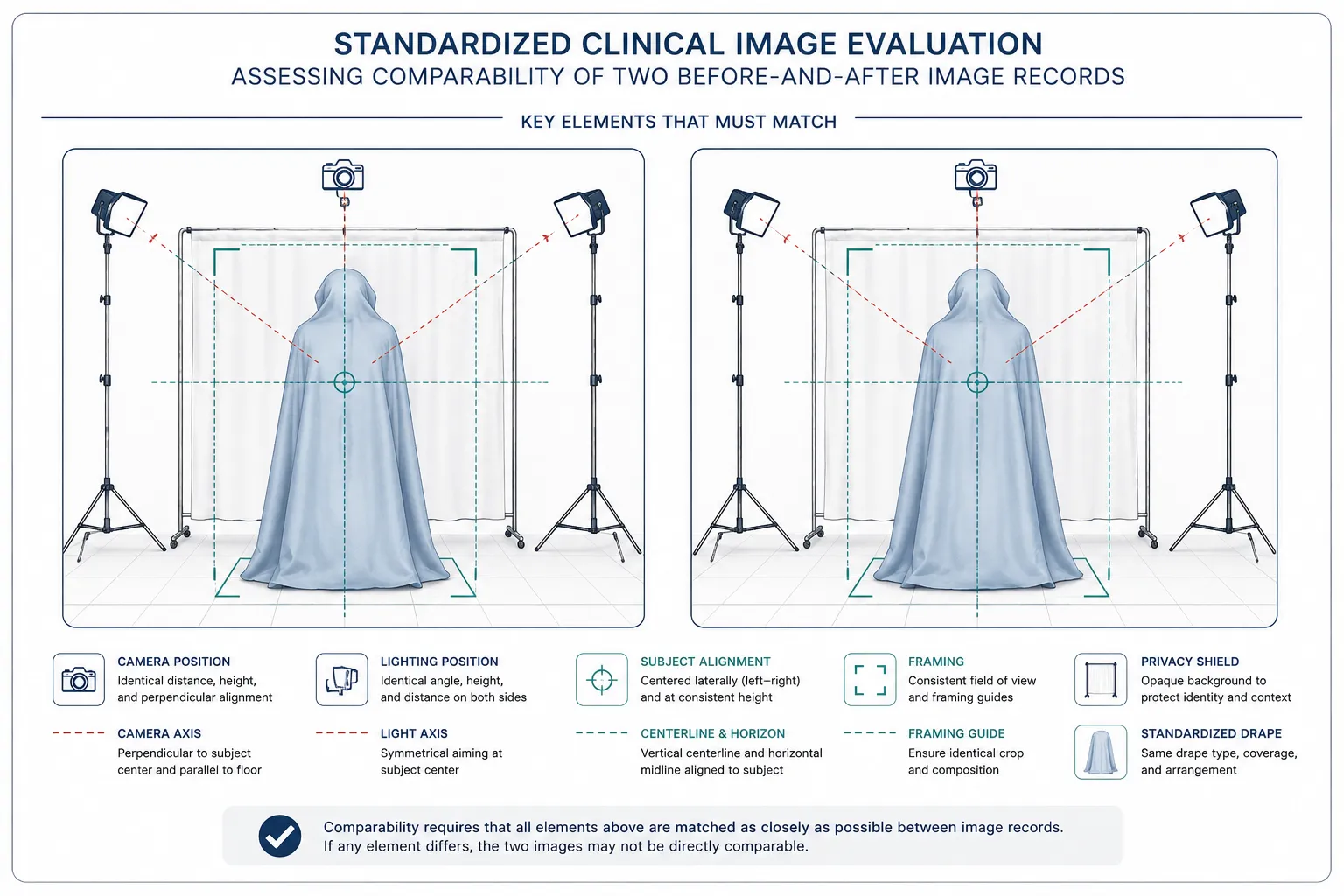
Quick answer: A trustworthy comparison uses the same camera angle, distance, lighting, framing, position, and physical state in both images. It also identifies the treatment, number of sessions, measurement method, follow-up interval, and any temporary change that could affect appearance.
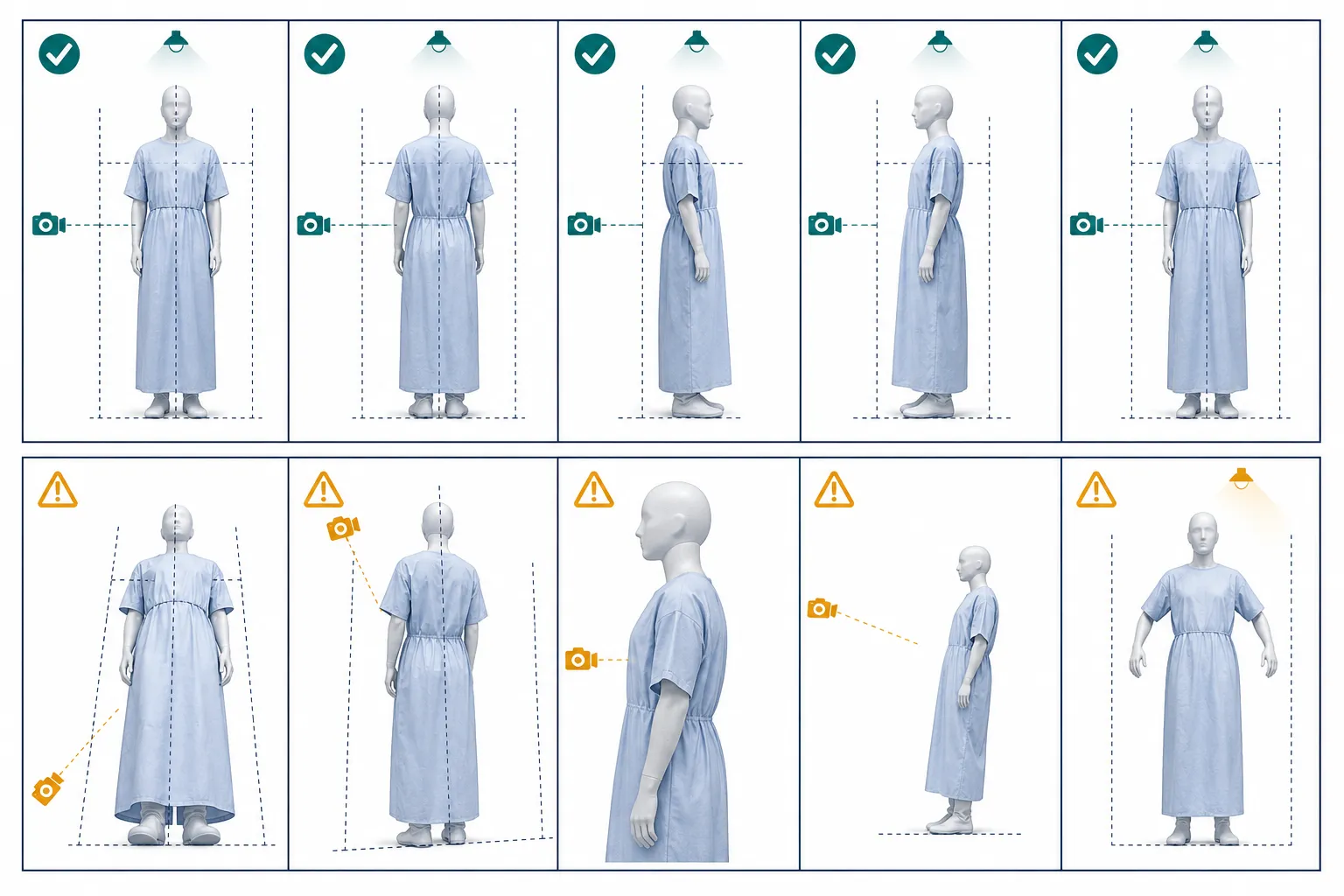
These controls make an image more interpretable. They do not establish average results, durability, safety, or suitability for another person.
Published clinical photography standards call for consistent equipment, lens settings, lighting, and patient positioning. If those conditions change, the comparison weakens. The viewer can no longer tell how much of the apparent difference came from treatment and how much came from the photograph.
What Photos Can Show and What They Cannot Prove
A photo can document how one person looked at two selected moments. It cannot show what happened across every patient who received the same treatment.
| A photo may show | A photo cannot prove by itself |
| A visible change in one patient | The average or expected result |
| Appearance at one stated follow-up point | How long the change will last |
| Contour, proportion, or asymmetry | The treatment’s complication rate |
| Whether a clinic records cases consistently | Whether another person is medically suitable |
| One documented outcome | Whether one method is safer or more effective |
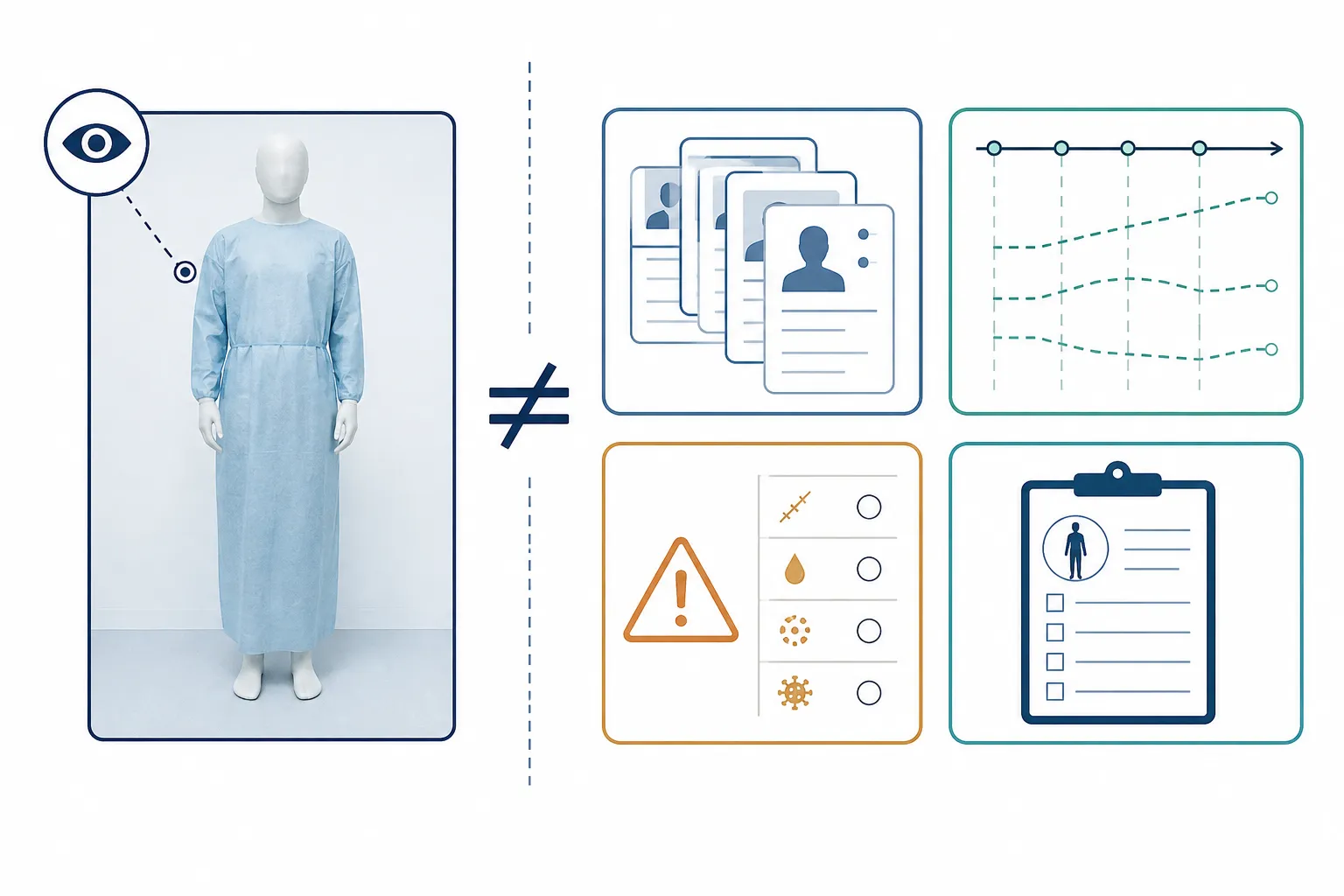
The distinction is decisive. A genuine photo may still create a misleading impression if the clinic selects an unusual result, omits complications, or hides the timing.
The 2024 Sexual Medicine Society of North America position statement found limited evidence for invasive cosmetic penile enhancement. Many studies used short follow-up periods and few standardized assessments. The statement also cautioned against broad conclusions from small, narrowly selected datasets. A single image provides even less information because it shows no denominator, outcome range, or adverse-event data.
Photo-Audit Checklist: Test the Comparison Before Trusting It
Start with the conditions, not the apparent size difference. If the angle, physical state, timing, or measurement method changes, the comparison may fail even when both photographs are authentic.
| Audit question | What a credible image should disclose | Why it matters |
| Are angle and distance matched? | Similar camera height, direction, crop, focal length, and subject distance | Perspective can alter apparent width and proportion |
| Is the physical state matched? | Both images clearly labeled as flaccid, stretched, or erect | Different states do not support a direct comparison |
| Are lighting and positioning consistent? | Similar light direction, exposure, posture, background, and body position | Shadows and posture can exaggerate contour changes |
| Is the measurement method clear? | Same instrument, anatomical points, shaft location, and conditions | A ruler alone does not create a repeatable measurement |
| Are treatment details included? | Procedure or device, material when relevant, and number of sessions | The viewer must know what occurred between images |
| Is the timing exact? | A stated number of days, weeks, or months after treatment | “After” does not separate early healing from a later result |
| Are swelling and editing disclosed? | Healing stage, temporary change, cropping, retouching, and privacy edits | These factors can alter apparent size or shape |
| Is typicality explained? | Whether the clinic considers the case typical, selected, or unusual | One favorable case should not represent every patient |
| Is provenance clear? | Image owner, chronological order, and patient authorization | Provenance supports authenticity and accountability |
Camera consistency matters because a closer camera position can make the subject look wider. Different focal lengths can also change perspective. Cropping two source images until the subject fills the same amount of space can conceal those differences.
Lighting deserves the same scrutiny. Brighter frontal lighting may reduce visible irregularities, while darker side lighting may deepen shadows and emphasize contour. Multiple matched views provide more information than one favorable angle.
Physical state must match as well. Do not compare a flaccid image with an erect or partially erect image. The caption should identify the state instead of forcing the viewer to guess. Posture, pelvic angle, compression, and support should remain as consistent as practical.
A Ruler Does Not Guarantee an Accurate Result
A ruler adds value only when the clinic uses a defined method. The record should state what the assessor measured, where the measurement started and ended, whether the penis was flaccid, stretched, or erect, and who performed the measurement.
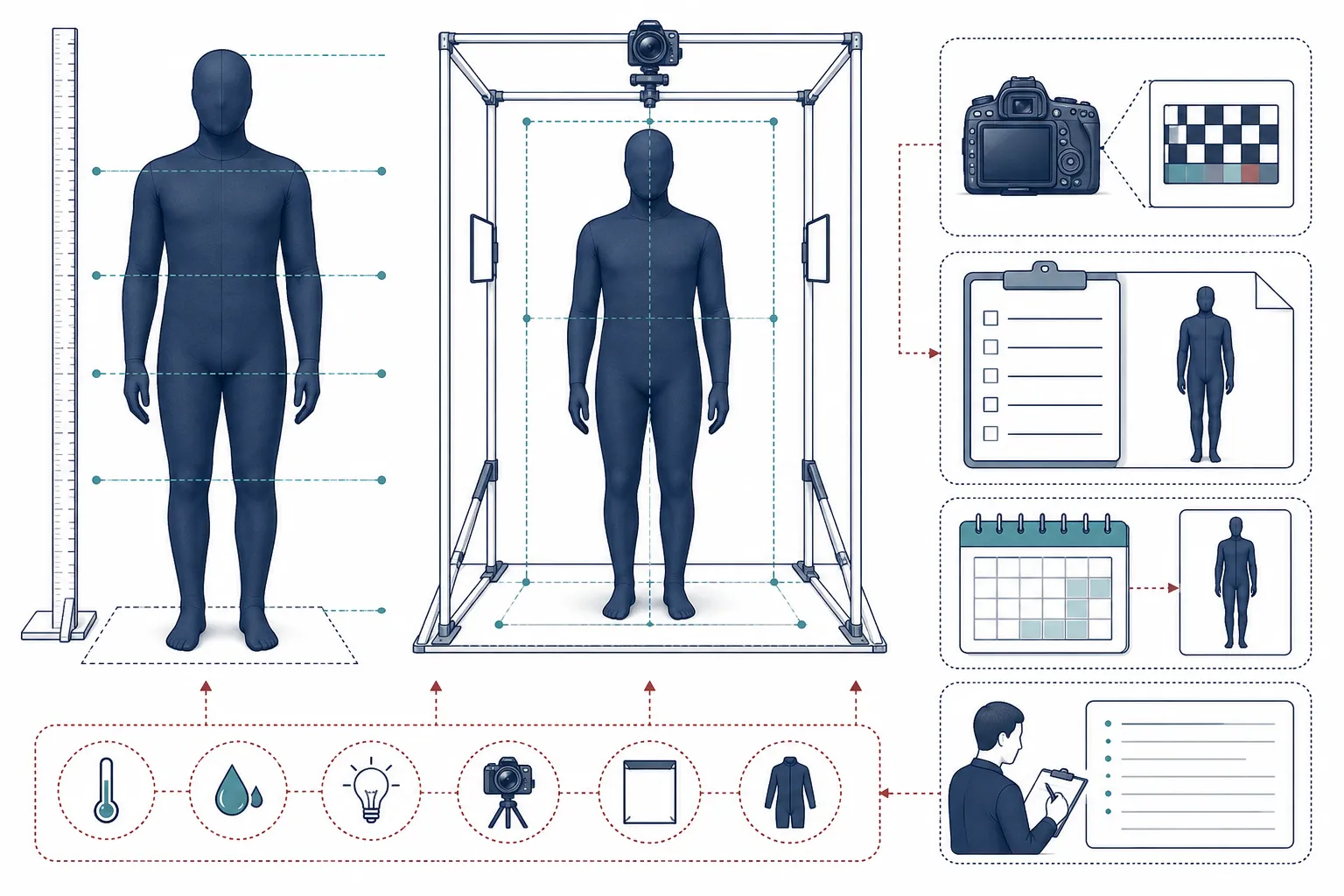
A systematic review of penile measurement methods found wide variation in instruments, penile states, positions, examination conditions, and assessors. The authors concluded that precise, shared methods are necessary for comparable data.
The European Association of Urology guideline also notes that penile-size measurement remains heterogeneous. It recommends documenting penile state and measurement location. A tape measure in a photograph cannot show whether the assessor applied the same tension, used the same shaft location, or reproduced the original conditions.
Timing Can Change the Meaning of the “After” Image
Every after photo needs an exact interval. “After treatment” could mean minutes, days, or months later. Those images do not answer the same question.
An early image may include swelling or another temporary tissue change. That does not make it useless, but the clinic should label it as an early follow-up rather than a stable result. The correct documentation schedule depends on the procedure, healing process, repeat sessions, and outcome under review.
A credible sequence separates baseline, early recovery, and later follow-up. The site’s girth-enhancement recovery timeline can help readers identify the timing questions to ask, but the treating clinician and procedure-specific evidence should determine how to interpret an individual result.
Individual Results Are Not Typical Results
One patient can have a real result without representing everyone else. To judge typicality, readers need group-level information that photographs cannot provide.
Look for the number of patients treated, the range of outcomes, follow-up duration, repeat sessions, adverse events, revisions, withdrawals, and loss to follow-up. The clinic should also explain how it selected the displayed case and whether it has a financial interest in the treatment.
The Federal Trade Commission’s health-products guidance explains that images can communicate implied outcome claims. It also states that an advertiser cannot correct an atypical testimonial with a small “results may vary” disclaimer alone. The advertiser must clearly explain what consumers can generally expect.
That principle applies directly to the way readers should interpret penis enlargement before-and-after accuracy results. A striking image carries little decision value if the clinic does not disclose the typical outcome.
Red Flags That Should Reduce Your Trust
One mismatch does not prove manipulation. It does create uncertainty. Several mismatches should sharply reduce the weight you give the images.
Watch for:
- Different camera angles, distances, crops, or physical states
- Darker lighting before treatment and brighter lighting afterward
- No procedure, product, session, or follow-up information
- A ruler without a stated measurement method
- Immediate post-procedure images presented as final results
- Filters, smoothing, reshaping, or selective blurring
- One dramatic case presented without typical-outcome data
- No discussion of uncertainty, risks, or complications
- No source, ownership, consent, or privacy information
Patient images also require careful privacy controls. The American Medical Association’s guidance on public visual recordings calls for consent and accurate, complete public information. HHS states that covered entities generally need written authorization before using protected health information for marketing. A viewer cannot verify consent from the image, but the clinic should maintain documented authorization and protect identifying information.
Use Photos After the Evidence, Not Instead of It
The correct order is simple: photos illustrate, studies estimate, and clinical assessment decides.
- Standardized photographs document one visible case.
- Transparent clinic data show results across a defined patient group.
- Prospective studies and systematic reviews assess outcomes under stated methods.
- Professional guidance weighs evidence quality, risks, and limitations.
- Individual assessment addresses anatomy, health, expectations, and suitability.
A systematic review of penile-enhancement interventions found low overall study quality and no standardized criteria for reporting efficacy, safety, and satisfaction. This weakens direct comparisons even when studies report numerical changes. It also makes photo-only claims especially unreliable.
Use the penile-enhancement research library to compare methods by evidence, reversibility, risk, and total cost. Readers comparing injectable options can review the site’s girth-enhancement filler guide and cost breakdown, then verify any safety, duration, and outcome claim against current medical evidence.
When Professional Assessment Matters More Than Photos
Photos cannot assess anatomy, circulation, skin condition, previous procedures, medication risks, or psychological readiness. They also cannot determine whether dissatisfaction reflects an anatomical concern, unrealistic expectations, repeated comparison, or distress about normal variation.
The EAU recommends a comprehensive medical and sexual history, objective measurement, and screening for body dysmorphic concerns when a man with normal measurements reports substantial distress. The SMSNA also supports psychological assessment before invasive enhancement when a relevant condition may be present. This does not mean every concern reflects a disorder. It means that images cannot replace an assessment.
Review who may be a candidate for girth enhancement and the site’s consultation question checklist before considering a procedure.
The Bottom Line on Penis Enlargement Before-and-After Accuracy
Trust the method before you trust the image. Matched photos with clear treatment, timing, measurement, and typicality disclosures deserve more weight, but they still document only one selected case.
Do not let a dramatic photograph bypass the evidence. Compare study quality, reversibility, known risks, follow-up burden, and total cost before deciding what the image means.
Frequently Asked Questions
What makes a penile enhancement before-and-after photo trustworthy?
The images should match in angle, distance, lighting, framing, position, and physical state. The clinic should also disclose treatment details, sessions, measurement method, follow-up interval, swelling, editing, and whether the result is typical.
Can a ruler make penis enlargement photos accurate?
Only when the clinic uses the same anatomical points, penile state, instrument, position, and technique. A ruler in the frame does not prove that the measurement is repeatable or clinically meaningful.
Can swelling make an after photo look larger?
Swelling and temporary tissue changes can affect appearance after some procedures. The caption should state exactly when the clinic took the image and whether the treating clinician expected temporary change at that point.
Do before-and-after photos prove that penis enlargement works?
No. A photo shows one selected case. It does not report average results, the range of outcomes, follow-up losses, durability, or complications.
When should a clinic take an after photo?
No single interval applies to every method. The clinic should state the exact follow-up point and distinguish early recovery from a later documented result.
What should a clinic disclose with enhancement photos?
The clinic should identify the treatment, sessions, timing, measurement method, physical state, and any swelling or editing. It should also explain typicality and confirm that it has authorization to publish the image.
Are before-and-after results typical for every patient?
No. Anatomy, treatment method, technique, healing, and repeat sessions can affect the result. Look for group-level data rather than assuming that the most dramatic case predicts another person’s outcome.
References
- DiBernardo BE, Adams RL, Krause J, Fiorillo MA, and Gheradini G. Photographic standards in plastic surgery. Plastic and Reconstructive Surgery. 1998.
- Cakir OO, Pozzi E, Castiglione F, et al. Penile Length Measurement: Methodological Challenges and Recommendations, a Systematic Review. The Journal of Sexual Medicine. 2021.
- Trost L, Khera M, Köhler T, et al. Cosmetic penile enhancement procedures: an SMSNA position statement. The Journal of Sexual Medicine. 2024.
- European Association of Urology. Penile Size Abnormalities and Dysmorphophobia. EAU Guidelines on Sexual and Reproductive Health.
- Romero-Otero J, Manfredi C, Ralph D, et al. Non-invasive and surgical penile enhancement interventions for aesthetic or therapeutic purposes: a systematic review. BJU International. 2021.
- Federal Trade Commission. Health Products Compliance Guidance. 2022.
- American Medical Association. Audio or Visual Recording of Patients for Public Education. AMA Code of Medical Ethics.
- US Department of Health and Human Services. Marketing and the HIPAA Privacy Rule.