
Penile traction can increase measured length in some men, but the evidence is narrower than many product pages suggest. Cosmetic studies remain small, use different measurements, and often require months of consistent wear. Research in Peyronie’s disease addresses curvature and lost length, so it does not automatically prove that an extender will enlarge a healthy penis.
The clearest answer is this: a penile traction device may produce a limited length change with sustained use, but it does not reliably increase girth. Long-term durability after stopping treatment also remains uncertain.
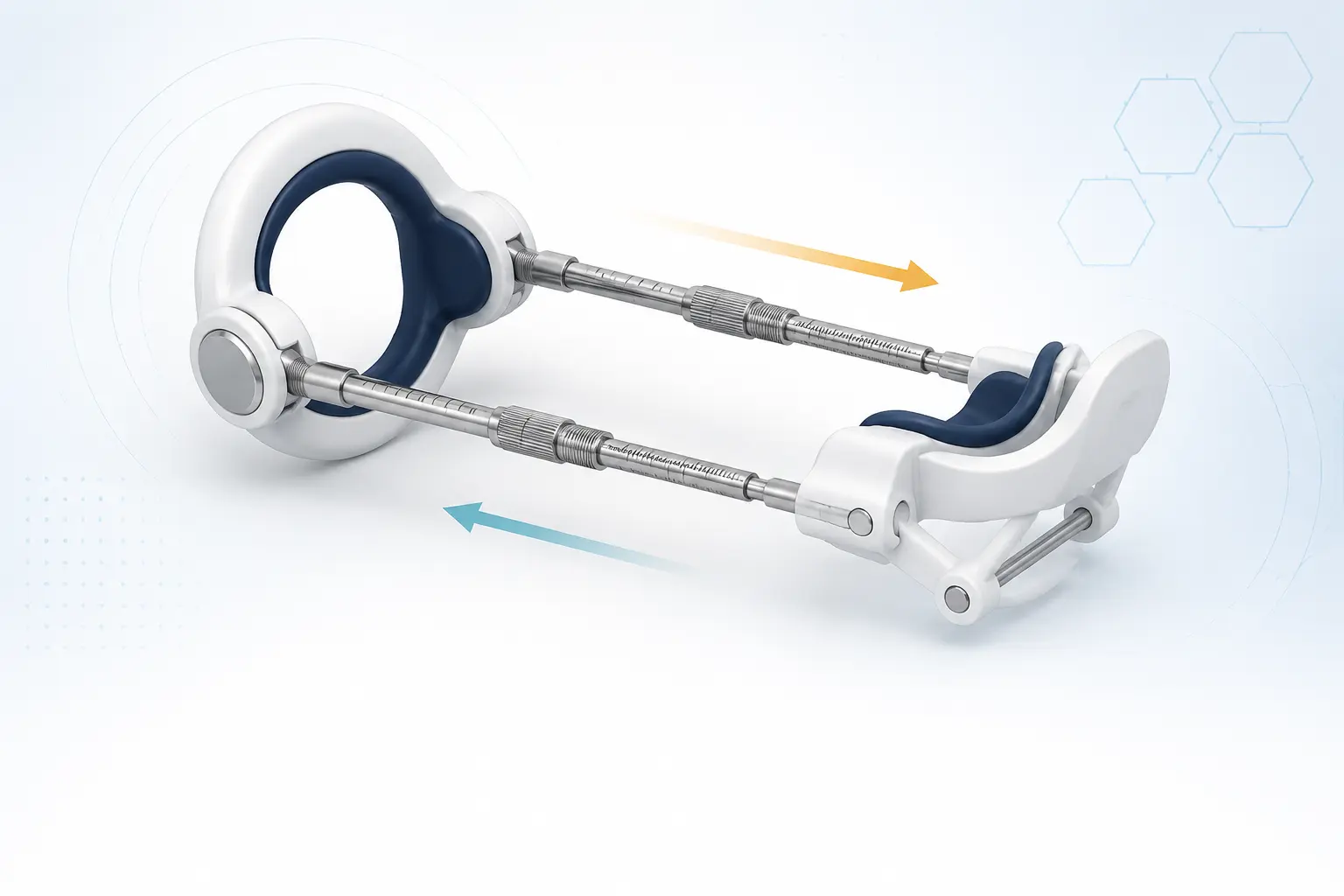
Figure 1. Educational illustration of a generic, non-branded penile traction device showing the direction of longitudinal tension. It does not demonstrate effectiveness, safety, or an expected result.
Key takeaway
- Length: Small studies report gains, but results vary by device, protocol, measurement method, and adherence.
- Girth: Current clinical evidence does not support traction as a dependable girth-enhancement method.
- Peyronie’s disease: Traction may help selected men manage curvature or recover lost length, but a clinician should guide treatment.
What Is a Penile Traction Device?
A penile traction device, also called a penile extender, holds the penis under controlled tension for repeated sessions. The proposed mechanism involves gradual tissue adaptation to sustained mechanical force. That theory explains why researchers study traction, but it does not prove that every device or schedule produces the same result.
Traction differs from a vacuum erection device. An extender applies longitudinal tension, while a pump uses negative pressure to draw blood into the penis. Neither is the same as weights, manual exercises, injectable fillers, or surgery.
The distinction between length and circumference also matters. Our guide to penile girth versus length explains why a change in one measurement says nothing about the other.
Do Penile Traction Devices Work?
Your goal determines what “works” means.
| Goal | What the evidence supports | Main limitation |
| Increase length | Some small cosmetic studies report increases in flaccid, stretched, or erect length after several months | Few controlled trials, inconsistent measurements, and demanding wear schedules |
| Increase girth | The current evidence does not show a reliable girth increase from traction | Limited studies and no consistent positive effect |
| Treat Peyronie’s disease | Selected studies report reduced curvature or recovered length in some men | Devices, disease stages, protocols, and outcomes differ substantially |
A positive result in one column does not transfer to another. A device that helps a man with Peyronie’s disease recover lost length has not necessarily proved that it enlarges a healthy penis. A change in stretched length also does not guarantee the same change during erection.
What Do Penile Traction Device Studies Actually Show?
The numbers only make sense when the population, device, wear schedule, measurement, and follow-up period stay attached to them.
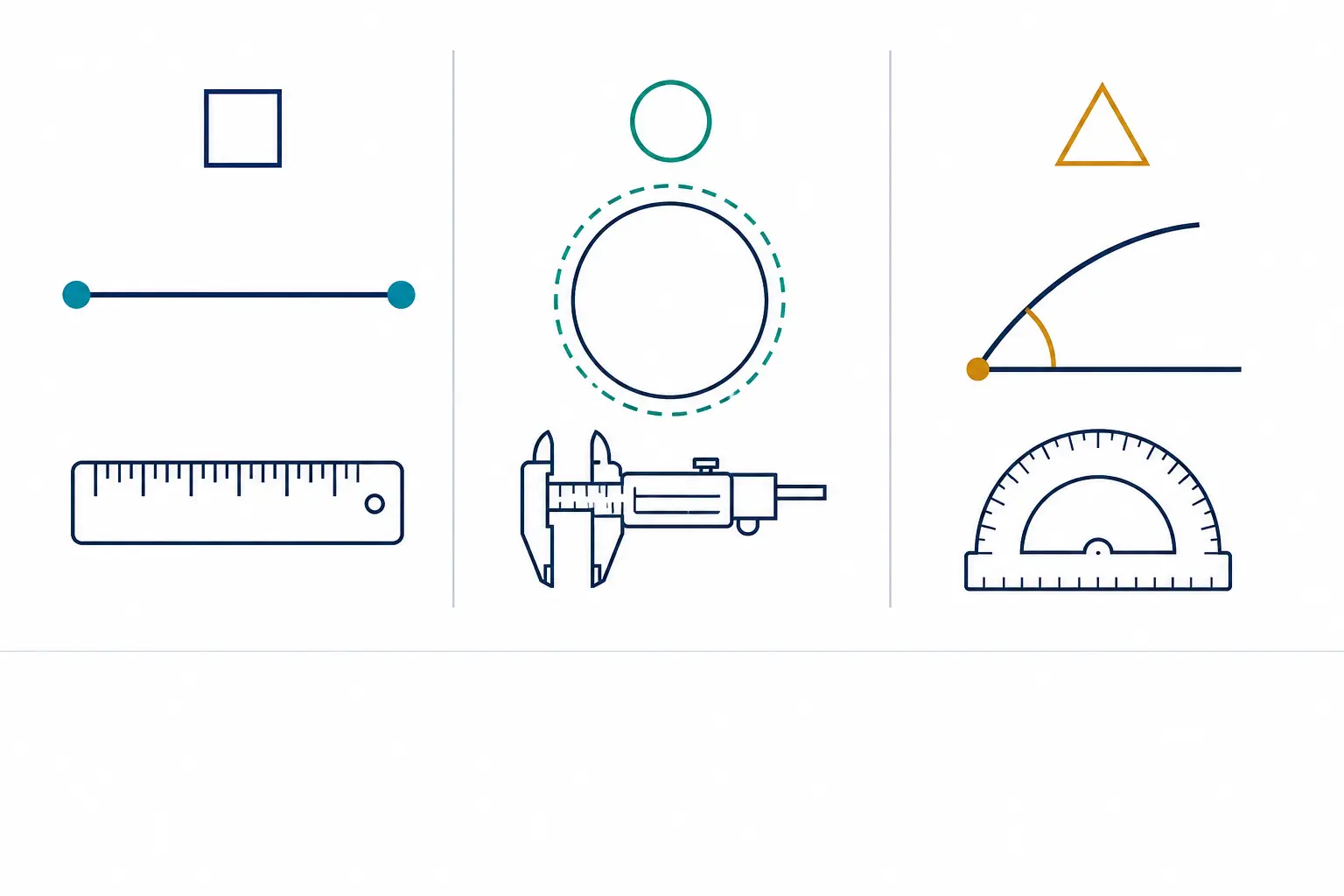
Figure 2. Traction studies may report length, circumference, or curvature. These are different endpoints, so a finding for one should not be treated as proof of another.
| Source | Population and protocol | Main finding | What it does not prove |
| EAU guideline on penile size abnormalities | Small prospective cosmetic cohorts used traction for 3 to 6 months, often 4 to 9 hours daily | Reported average length changes ranged from about 1.2 to 2.3 cm, depending on the study and measurement; girth did not improve significantly | The guideline rates the evidence as poor because studies were small, heterogeneous, and lacked randomized controls |
| RestoreX randomized trial | Researchers randomized 110 men with Peyronie’s disease to 30 to 90 minutes of daily use or no therapy for 3 months | The treatment group gained 1.5 cm versus 0 cm and improved curvature by 11.7 degrees versus a 1.3-degree increase in controls | Results from one device and one disease population do not establish cosmetic enlargement in healthy users |
| 2023 systematic review and meta-analysis | Five controlled and cohort studies included 419 men with Peyronie’s disease | The pooled analysis found a significant curvature effect but no significant effect on length or erectile function | Individual positive trials do not guarantee a consistent pooled benefit across devices and protocols |
| ESSM position statement | Five primary-treatment studies used different devices for 0.5 to 9 hours daily over 3 to 6 months | The panel called the results promising | Limited evidence and inconsistent study methods prevented a definitive recommendation |
What we know: Traction has produced measurable length or curvature changes in selected studies. Consistent use matters, and the protocol may range from less than an hour to several hours each day.
What remains uncertain: Researchers have not established one result that applies across devices, healthy users, Peyronie’s disease, or post-treatment rehabilitation. The evidence also does not establish a dependable girth gain or prove that cosmetic length changes persist indefinitely after stopping.
ClinicalTrials.gov lists Mayo Clinic as the RestoreX trial sponsor and states that Mayo Ventures funded development of the device. That relationship does not invalidate the results, but readers should consider it alongside the trial design, control group, follow-up, and later independent reviews.
Cosmetic Lengthening Is Not the Same as Peyronie’s Treatment
Peyronie’s disease can cause acquired curvature, pain, indentation, shortening, or difficulty with erections. Traction in this setting aims to reduce deformity or recover length lost to scar-related change. Cosmetic traction starts from a different clinical question: whether a man without that disease can increase his baseline length.
The 2026 European Association of Urology guideline gives only a weak recommendation for traction or vacuum devices in Peyronie’s disease because outcome data remain limited. It also stresses counselling about treatment choices and expected outcomes.
See a urologist before trying to correct new curvature, pain, a palpable plaque, shortening, or erectile difficulty on your own. A clinical assessment can distinguish Peyronie’s disease from congenital curvature, measurement differences, and other causes. The site’s guide to who may be a candidate for girth enhancement also explains why anatomy, health, and expectations need individual review before any enhancement decision.
Are Penile Traction Device Results Permanent?
Current evidence does not justify a blanket claim of permanent enlargement. Most cosmetic studies followed participants during a 3- to 6-month treatment period. They measured change after repeated use, but they provided limited information about what remained long after treatment stopped.
That distinction matters. An increase recorded at the end of active treatment is not the same as a stable result years later without maintenance.
Before-and-after images cannot answer the durability question by themselves. Length can appear different because of erection quality, camera distance, angle, lighting, temperature, body position, or where the measurement started. Review any before-and-after gallery as supporting context, not as a substitute for standardized measurements, treatment details, follow-up time, and a clear statement about individual variation.
What Affects Results, Wear Time, and Total Cost?
Traction asks more of the user than the purchase price suggests. The real commitment includes daily wear, correct fitting, gradual adjustment under the applicable instructions, cleaning, replacement parts, and months of consistent use.
Results may differ because of:
- The reason for treatment
- Starting anatomy and measurement method
- Device design and fit
- Daily wear time and total treatment period
- Adherence, interruptions, and discomfort
- Whether researchers combined traction with another treatment
- How long researchers followed the user after treatment
There is no universal schedule. Do not apply the 30- to 90-minute protocol from one Peyronie’s trial to every extender. Older cosmetic studies often required several hours daily. Follow the exact device instructions and any clinician-directed plan rather than copying a schedule from a different study.
Cost comparisons should include the device, accessories, replacement parts, return terms, and the value of the time required. When comparing traction with an office-based option, review the site’s girth enlargement cost guide and compare the total commitment, not only the upfront price.
Penile Traction Device Side Effects and Safety Limits
Published studies commonly report temporary discomfort, redness, tenderness, or reduced sensation. The EAU guideline notes that prolonged wear can feel inconvenient, even when highly motivated users tolerate it. A 2019 randomized trial reported mild, temporary adverse events, but that finding applies to the studied device and population.
Small trials cannot prove that serious complications never occur. Incorrect sizing, excessive tension, prolonged use beyond instructions, or continuing despite symptoms can increase the chance of harm.
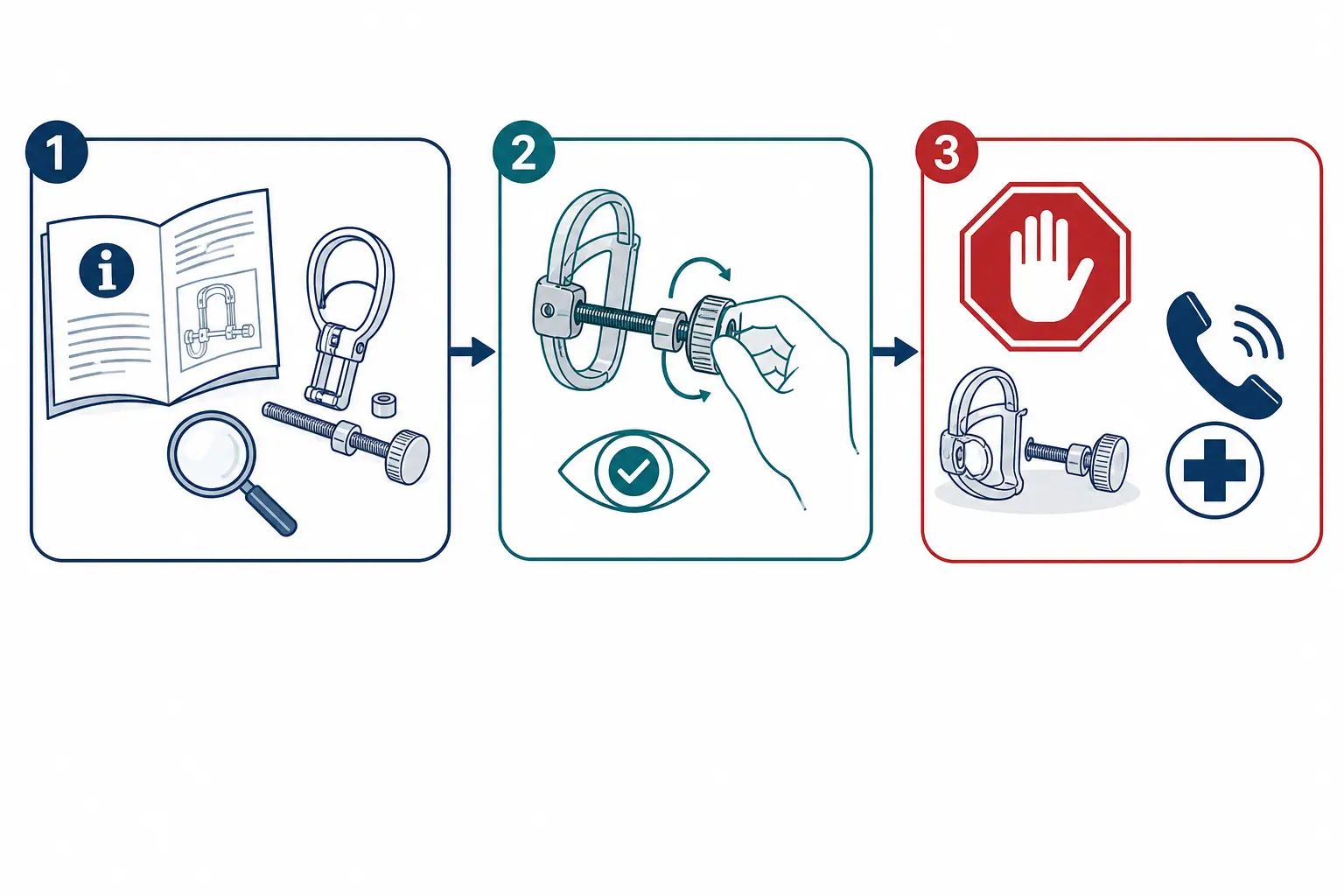
Figure 3. Review the instructions for the exact device, monitor fit and comfort during use, and stop rather than increasing force or continuing through concerning symptoms. The adjacent text lists when to seek medical advice.
Stop using the device and seek medical advice if pain persists, skin breaks down, numbness does not resolve, swelling or discoloration develops, or curvature worsens. Do not use traction to self-treat a suspected disease or injury. A clinician can assess whether traction fits the diagnosis and whether the chosen device has evidence for that use.
Before committing to any treatment, use these consultation questions for penile enhancement to ask about risks, alternatives, expected outcomes, follow-up, and total cost.
How to Compare Traction With Other Non-Invasive Methods
Do not choose a method because its mechanism sounds scientific or its product page shows the largest number. Compare each option against the same criteria.
| Decision factor | Penile traction | Vacuum device | Injectable filler |
| Main intended change | Length or disease-related deformity, depending on indication | Temporary engorgement or selected rehabilitation uses | Girth rather than length |
| Evidence question | Does the study match the device, goal, and population? | Does the claim concern temporary response or lasting structural change? | What product, technique, outcome, and follow-up support the claim? |
| Time demand | Repeated use for months | Repeated sessions depending on indication | Clinical visits plus recovery and follow-up |
| Main risk question | Fit, tension, discomfort, sensation, and adherence | Pressure-related discomfort, bruising, or injury from misuse | Procedure, product, vascular, contour, infection, and aftercare risks |
| Reversibility | No injected material, but durability of gains remains uncertain | Immediate pressure effect usually resolves | Depends on the material and clinical circumstances |
The phrase “best penile traction device” has no responsible universal answer. A useful comparison asks whether researchers studied the device for your goal, whether you can follow the protocol, and whether the expected change justifies the burden and risk.
Traction also targets length, not dependable girth gain. Readers comparing goals can review non-surgical penile enlargement options. Compare evidence, reversibility, risk, recovery, and total cost before deciding.
Frequently Asked Questions
What is a penile traction device?
A penile traction device is an external frame that applies controlled longitudinal tension to the penis. Users wear it in repeated sessions according to a device-specific or clinician-directed protocol.
Do penile traction devices work?
Some studies report increased measured length or reduced Peyronie’s curvature. Results vary, and the evidence does not support one expected gain across devices, users, and treatment goals.
Can a penile traction device permanently increase length?
Researchers have not proved permanent cosmetic enlargement across devices. Most studies report outcomes during or soon after months of active use, with limited evidence about durability after stopping.
Who might benefit from penile traction therapy?
Potential users include selected men seeking cosmetic length change and men receiving care for Peyronie’s disease or length loss after treatment. A clinician should assess symptoms, anatomy, goals, and contraindications first.
How do you use a penile traction device?
Use only the fitting, tension, wear, and cleaning instructions for that exact device. Do not copy a study protocol from another model or increase force to chase faster results.
What side effects can penile traction devices cause?
Studies report discomfort, redness, tenderness, and temporary sensory changes. Stop use and seek advice for persistent pain, injury, unresolved numbness, swelling, discoloration, or worsening curvature.
Can a penile traction device increase girth?
Current clinical evidence does not support traction as a reliable girth-enhancement method. The cosmetic studies summarized by the EAU reported length changes without a significant girth benefit.
How are penile extenders different from penis pumps?
Extenders apply longitudinal tension over time. Pumps use negative pressure to draw blood into the penis, so a temporary increase during use does not establish permanent tissue enlargement.
How long does penile traction take to show results?
Published studies usually assess outcomes after 3 to 6 months. Daily use ranges from less than an hour to several hours, depending on the device and indication.
How much does a penile traction device cost?
Prices vary by model, accessories, warranty, and replacement parts. Compare total cost with the daily time commitment, return policy, clinical assessment, and strength of device-specific evidence.
Are penile traction before-and-after photos or reviews reliable?
They can add context, but they cannot establish a typical or lasting result alone. Look for standardized measurements, consistent conditions, treatment details, follow-up time, consent, and disclosure of variation.
When should I speak with a urologist instead of using a device alone?
Seek assessment for new curvature, penile pain, a plaque or lump, shortening, erectile difficulty, injury, or persistent sensory change. These findings may need diagnosis and individualized treatment.
References
- European Association of Urology: Penile Size Abnormalities and Dysmorphophobia
- European Association of Urology: Penile Curvature
- European Society for Sexual Medicine Position Statements on Penile Traction Devices
- Systematic Review and Meta-Analysis of Traction for Peyronie’s Disease
- Randomized Controlled Trial of a Penile Traction Device in Peyronie’s Disease