
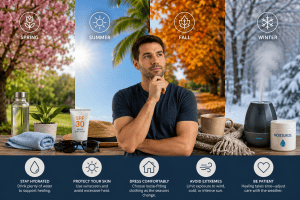
Most patients think about their girth enhancement recovery in terms of days and weeks — the timeline, the activity restrictions, the follow-up appointment. Fewer think about how the season they’re recovering in might shape that process. It’s a reasonable oversight. But temperature, humidity, sun exposure, and activity patterns all change with the seasons in ways that are directly relevant to how the body heals after a filler procedure.
The Core Healing Variables That Seasons Affect
The connection between seasonal weather and recovery after penile fillers runs through several overlapping physiological channels. Understanding them makes the seasonal considerations more actionable than a general “be careful in hot weather” instruction.
Tissue Perfusion and Temperature
The filler integration process — how the hyaluronic acid distributes evenly into the surrounding tissue and establishes a stable volume — depends on adequate blood flow to the treatment area. Temperature affects peripheral vascular tone: heat causes vasodilation (blood vessels widen, increasing blood flow to the skin and peripheral tissues), while cold causes vasoconstriction (blood vessels narrow, reducing blood flow). Both extremes have implications for the healing environment after a filler procedure, though in different ways.
Inflammatory Response
Swelling and bruising in the post-procedure period are expressions of the normal acute inflammatory response — the body’s first-response mechanism for any tissue disturbance. The inflammatory response is temperature-sensitive: heat can amplify vasodilation and extend swelling, while cold reduces inflammation through vasoconstriction. Managing the inflammatory response during the early recovery period is part of what post-procedure care instructions address, and seasonal temperature conditions interact with this process in ways worth understanding.
Sweat and Skin Microbiome
The injection sites represent a temporary break in the skin barrier — small entry points through which filler was placed and which heal over within hours to a day or two. During this early closure window, anything that introduces moisture, bacteria, or friction to the treatment area is a potential infection risk. Sweat — the body’s thermoregulatory mechanism in hot weather — is one of those factors. The skin’s normal microbiome includes bacteria that are harmless on intact skin but can become relevant at recently injected sites in the brief window before complete surface healing.
“The injection sites close quickly. But ‘quickly’ in this context is hours to a day or two, not minutes. The first 24 to 48 hours are when the environment around the treatment area matters most for infection risk, and hot weather that produces persistent sweating during that window is a genuine consideration.”
Hot Weather and Summer Recovery: Specific Concerns
For patients in North Texas and similar climates where summer temperatures regularly reach the mid-90s to 100°F range, recovering from a girth enhancement procedure in summer requires specific attention to several factors that other seasons make less relevant.
Sweating After Treatment
Persistent sweating in the groin and genital area — which is among the body’s highest sweat-gland density regions — in the 24 to 72 hours following the procedure introduces moisture to the injection sites before they’ve fully normalized. The guidance to keep the area clean and dry in the immediate post-procedure period is harder to execute in summer conditions where ambient heat and humidity produce sweating even at rest. Patients recovering in hot weather should plan their first 48 to 72 hours specifically around environments where they can stay cool: air-conditioned spaces, loose-fitting breathable clothing, and minimal physical activity that would generate body heat and sweating beyond the baseline.
Sun Exposure and UV
Direct sun exposure to the treatment area in the first week post-procedure is typically advised against for the same reasons it is for other filler procedures on other body areas: UV radiation can affect the inflammatory response, promote hyperpigmentation at injection sites, and in prolonged exposure, affect the filler material’s behavior in the tissue. For most patients this isn’t a primary concern for this specific anatomical location — it’s an area not typically exposed to direct sun in normal daily activity. But it’s worth noting for patients whose summer activities include sunbathing or exposure scenarios where this would be relevant.
Outdoor Activity in July
The activity restrictions in the first one to two weeks after girth enhancement — specifically avoiding strenuous physical activity, contact sports, and vigorous exercise — align uncomfortably with summer activity patterns for many patients. Summer is when people are most likely to be physically active outdoors, doing exactly the kinds of activities the recovery period restricts. A patient who schedules the procedure in early July and plans to go back to recreational sports, lake activities, or outdoor workouts the following weekend hasn’t accounted for how the summer activity calendar intersects with the recovery timeline. Planning the procedure timing with the summer calendar in mind — or accepting a longer gap between the procedure and return to summer activities — produces better outcomes than trying to compress the recovery timeline to fit the summer schedule.
Cold Weather and Winter Recovery: Different Considerations
Cold weather recovery has a different profile from summer recovery — the sweating concern is reduced, the outdoor activity restrictions are less socially disruptive in winter, and the indoor time that characterizes cold-weather days aligns naturally with the rest and reduced-activity recommendations of the post-procedure period.
Vasoconstriction and Tissue Perfusion
The primary cold-weather consideration is the opposite of the hot-weather concern: cold causes vasoconstriction, narrowing peripheral blood vessels and reducing blood flow to the skin and subcutaneous tissues. The same tissue perfusion that supports filler integration is reduced in cold conditions. For patients recovering in genuinely cold environments — exposed to outdoor cold for extended periods in winter months — maintaining warmth in the treatment area is relevant to supporting the tissue perfusion that serves the healing process. This doesn’t mean artificial warming or hot packs (which can increase swelling); it means avoiding prolonged cold exposure that produces vasoconstriction in the recovery area during the integration window.
Dry Air and Skin Integrity
Winter indoor environments — particularly in heated buildings — produce low-humidity conditions that can affect skin integrity and increase the transepidermal water loss that makes skin more susceptible to minor barrier disruptions. For a procedure that involves injection sites healing in the skin, maintaining appropriate skin hydration in the recovery area is relevant in winter. This is addressed through the same general skin care recommendations that apply year-round, but low-humidity winter environments make it a more active consideration than it would be in summer.
Spring and Fall: The Procedural Sweet Spots
Spring and fall — when temperatures are moderate, humidity is lower than summer, outdoor activity levels are compatible with some recovery restrictions, and neither extreme heat nor extreme cold is producing the specific considerations above — represent the most straightforward seasonal contexts for girth enhancement recovery. This doesn’t mean summer and winter procedures are inadvisable; it means they require more active management of the environmental factors above to produce the same straightforward recovery that spring and fall enable with less effort.
Travel Considerations: When Recovery Meets Seasonal Destinations
A specific situation worth addressing is the patient who schedules a girth enhancement procedure and then plans significant travel during the recovery window — whether for summer vacation, a warm-weather winter trip, or a holiday travel period. Airplane cabin environments (low humidity, confined seating that may affect circulation), exposure to hot climate destinations during the peak summer restriction period, and the reduced ability to contact the provider if questions arise during travel all factor into the timing decision.
The guidance here is practical rather than absolute: avoiding significant travel, especially air travel and travel to significantly hotter or colder climates than home, in the first week post-procedure gives the recovery process the most stable environment. Two weeks post-procedure, when the most critical integration period has passed, travel flexibility increases substantially for most patients.
Summer (hot/humid): sweating at injection sites in first 48-72 hours is the primary concern. Stay cool, dry, and in air-conditioned environments for the first 72 hours. Plan procedure timing around summer activity calendar — activity restrictions and summer plans are difficult to reconcile without advance planning.
Winter (cold): vasoconstriction from prolonged cold reduces tissue perfusion during integration window. Avoid extended cold exposure. Low-humidity indoor environments — maintain skin hydration. Recovery time aligns naturally with indoor, low-activity winter patterns.
Spring/Fall: most straightforward recovery context. Moderate temperatures, lower humidity, reduced conflict with outdoor activity seasons.
Travel: avoid significant travel, especially air travel and climate-shift destinations, in the first week post-procedure. Two weeks out, travel flexibility increases substantially.
For patients in the Argyle, Texas and North DFW area who are weighing procedure timing around the seasonal calendar, girth enhancement consultation in Argyle, Texas provides the individualized guidance for planning the procedure at a time that works with both your personal schedule and the seasonal context. For the full picture of how the clinic approaches recovery planning and post-procedure care, the girth enlargement clinic is the right starting point.
Frequently Asked Questions
Does hot weather make girth enhancement recovery harder?
Hot weather adds specific management requirements to the recovery period that cooler seasons don’t require to the same degree. The primary concern in hot weather is sweating at or near the injection sites during the first 48 to 72 hours before the injection sites have fully normalized. The groin and genital area has high sweat gland density, and persistent sweating in summer heat introduces moisture to the treatment area at a time when keeping it clean and dry is part of the post-procedure care protocol. The practical management is straightforward: stay in air-conditioned environments, wear loose breathable clothing, and avoid physical activity that generates sweating during the first 72 hours. Hot weather also amplifies vasodilation, which can extend the swelling period beyond what the same procedure would produce in cooler conditions.
Is winter a good time for girth enhancement recovery?
Winter has several advantages as a recovery season. The sweating concern that makes summer recovery require active environmental management is largely eliminated in cold weather. The indoor, lower-activity lifestyle that characterizes winter in many climates aligns naturally with the recovery period’s activity restrictions. And the social calendar in winter is less likely to include the specific summer activities — lake visits, outdoor sports, beach vacations — that conflict with the post-procedure restrictions. The winter-specific considerations are vasoconstriction from prolonged cold exposure (which reduces tissue perfusion during the integration window) and low-humidity indoor air (which affects skin integrity). Neither of these is a significant concern for most patients; they’re manageable with appropriate clothing in cold outdoor conditions and standard skin hydration care.
Can I travel after girth enhancement?
In the first week post-procedure, avoiding significant travel — particularly air travel and travel to climates significantly hotter or colder than your home environment — gives the recovery process the most stable conditions. Airplane cabin environments produce low humidity and confined seating that can affect circulation, and travel to a hot-weather destination during the first week of recovery introduces the sweating and heat exposure concerns that the post-procedure care protocol is specifically trying to minimize. Two weeks post-procedure, when the most critical filler integration period has passed for most patients, travel flexibility increases substantially. If travel plans are fixed and overlap with the recovery window, discussing the specific destination, duration, and travel format with your provider before the procedure allows them to advise on whether adjusted timing or additional precautions apply.
How long do I need to avoid outdoor activities in summer after girth enhancement?
The standard post-procedure activity restriction — avoiding strenuous physical activity, vigorous exercise, and activities that produce significant sweating or friction — applies for a minimum of one to two weeks following the procedure, with specific guidance from your provider based on your individual recovery progress. In summer, this restriction maps directly to outdoor recreational activities: swimming in lakes or pools (both a hygiene concern at injection sites and a submersion restriction), outdoor sports, and high-intensity outdoor activity. A patient who schedules the procedure in early July and plans to resume summer outdoor activities the following weekend should expect that timeline to be at least two weeks rather than a few days. Discussing your specific summer activity schedule with your provider at the consultation allows them to advise on procedure timing that accommodates your planned activities without compressing the recovery period.
Does the filler behave differently in hot versus cold weather?
The hyaluronic acid filler itself is temperature-stable within the normal range of human body temperatures and environmental conditions — the material doesn’t degrade or change composition based on seasonal weather. What does change seasonally is the tissue environment the filler is integrating with: tissue perfusion (blood flow to the area), the inflammatory response, and the hydration state of the surrounding tissue all vary with temperature and humidity. These tissue environment variables affect how the filler settles and distributes during the integration period rather than the filler material itself changing. The end result of a properly performed procedure should be equivalent across seasons when the recovery is managed appropriately for the specific seasonal conditions.
What is the best season to have girth enhancement?
Spring and fall represent the most straightforward recovery contexts for girth enhancement — moderate temperatures that don’t require active management of heat or cold extremes, lower humidity than summer, and activity calendars that are less likely to conflict with the post-procedure restrictions than either summer or major holiday winter periods. That said, the “best season” for an individual patient is also a function of their specific schedule and lifestyle — a patient with a summer work schedule that’s naturally low-activity may find summer recovery entirely manageable, while a patient whose fall is packed with outdoor sports may find fall recovery more complex than summer. The consultation is the right place to discuss your seasonal calendar and plan the procedure timing accordingly.